For semi-pro grinders
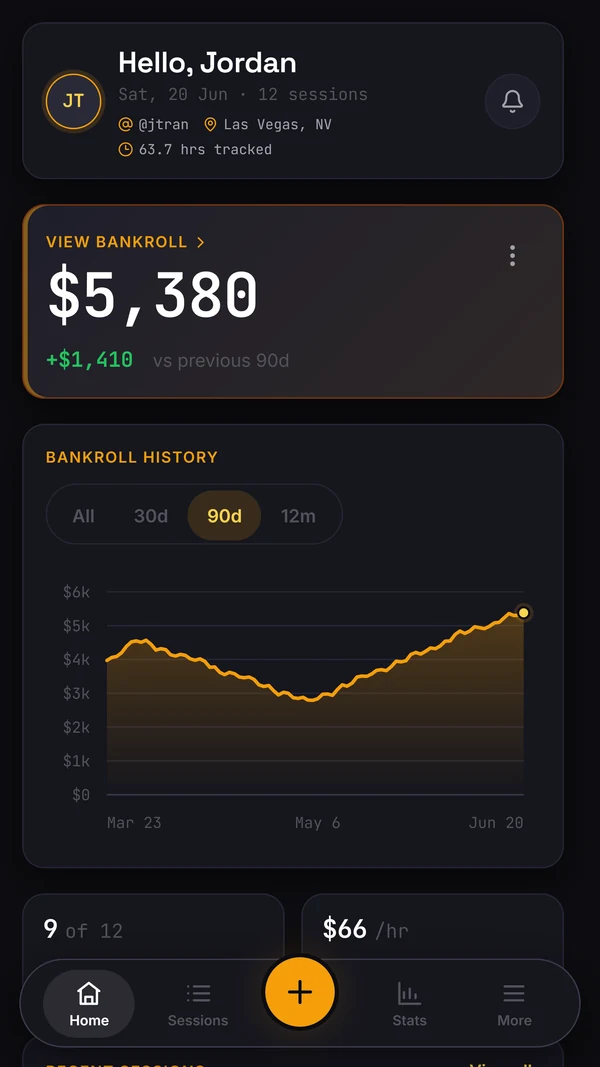
When poker takes a regular place in your week, keep a complete record of sessions and hours. Overshove has a live web log and stats view. Advanced bankroll, readiness and study modules are still in development.

Income, measured honestly
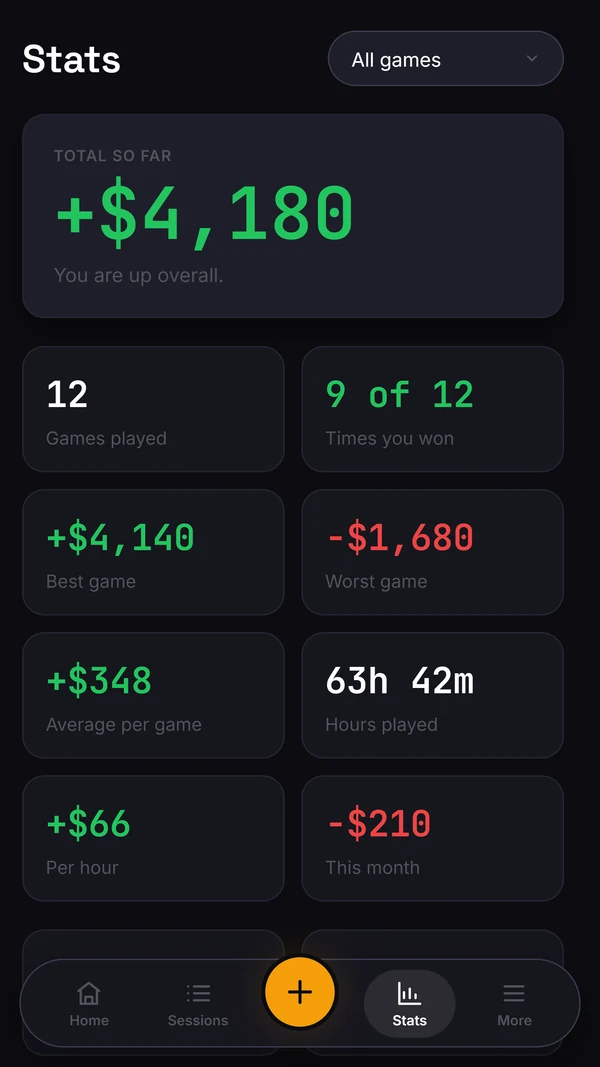
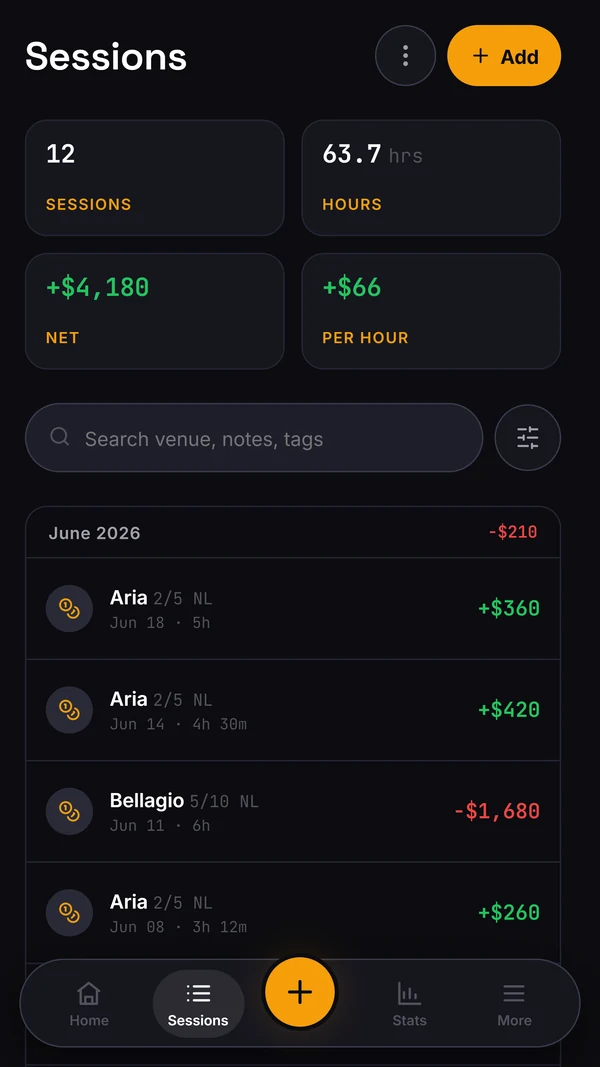
A result without hours cannot tell you much about your rate. A result without costs can also flatter it. Keep a consistent record of stakes, hours, buy-ins, cash-outs and any expenses relevant to you. Overshove's current web app lets you enter sessions, inspect the sessions list and review stats. The account screen offers a sessions CSV export for your own analysis.
Do not treat a short run of positive results as a dependable income forecast. A quarter of live play can still contain a small sample of hands, and neither a graph nor an hourly average can separate luck from decision quality on its own.
A week on the grind
An illustrative player logs two 2/5 sessions after work, recording the result and time at the table each time. On Sunday, they review both entries and compare the latest period with their longer record. They also check their own bankroll rules and review marked hands in a separate study tool.
That distinction matters. The current Overshove app contains Home, Sessions, Log and Stats. Its Readiness, Study, Player reads and Leaks modules are marked Soon. Those are product plans, not tasks the current app completes for this player.
What 40 hours actually pays
Consider a synthetic 40-table-hour month at £2/£5 across ten sessions. Cash-outs minus all buy-ins total +£2,400: £60 per table hour, or 12 BB/hr. Assume £240 in tips was paid from the stack; it is already reflected in that result. Ten round trips cost another £18 each in fuel and parking, paid separately and not included in the ledger.
Deduct only the additional £180: profit becomes £2,220, or £55.50 per table hour and 11.1 BB/hr, 7.5% below the table-result hourly. At the same invented cost per table hour, 480 hours would involve £2,160 of additional travel costs. This is scenario arithmetic, not an income forecast. Travel time belongs in a separately labelled door-to-door denominator. The current Stats view is not a guarantee that every cost is captured or double counting prevented.
Stay rolled, protect your A-game
A bankroll plan should be set before a session, including the stake and loss limit you are willing to accept. Record your decisions and review the plan away from the table. The current Overshove web app records sessions and shows stats; automated stake approval and readiness prompts are upcoming modules.
To put short-term swings in perspective, assume 40 hours at 27 hands an hour and a standard deviation of 100 BB per 100 hands. That is about 1,080 hands, and the standard deviation of the month's total is roughly 329 BB. These are illustrative inputs, not measurements of the player or a live variance calculation in Overshove. Keep the full record through losing periods so future analysis is based on all sessions.
- →Record every session and its hours
- →Review results in the current Stats view
- →Export sessions to CSV
- →Bankroll, readiness and study tools are upcoming