A poker bankroll tracker that tells the truth
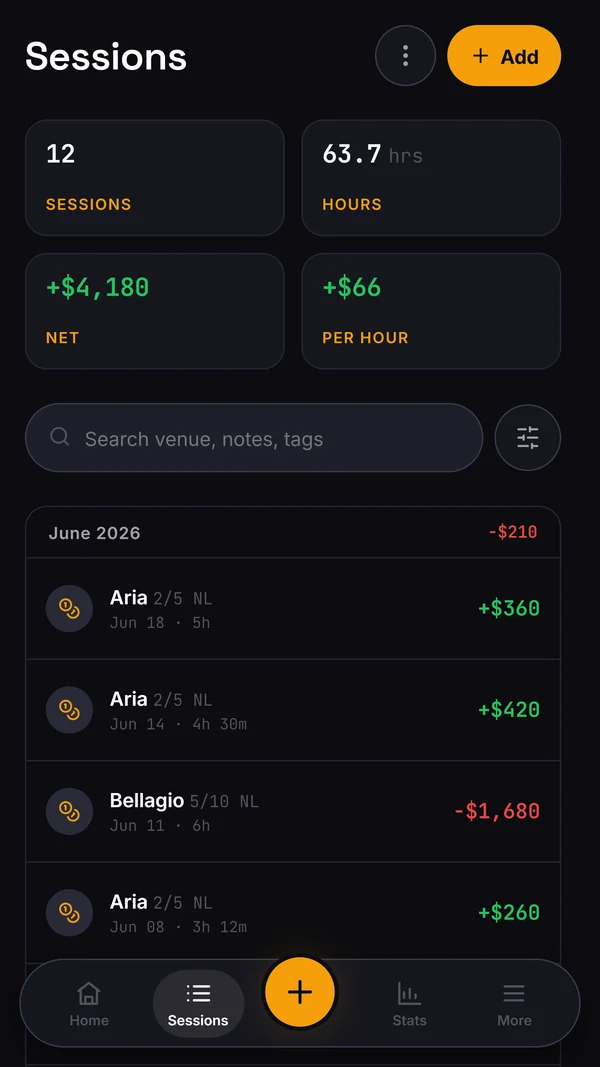
A bankroll tracker is only worth using if the record behind it is complete. Overshove links sessions and bankroll history in the web app so you can review the numbers you entered.

What should a poker bankroll tracker show?
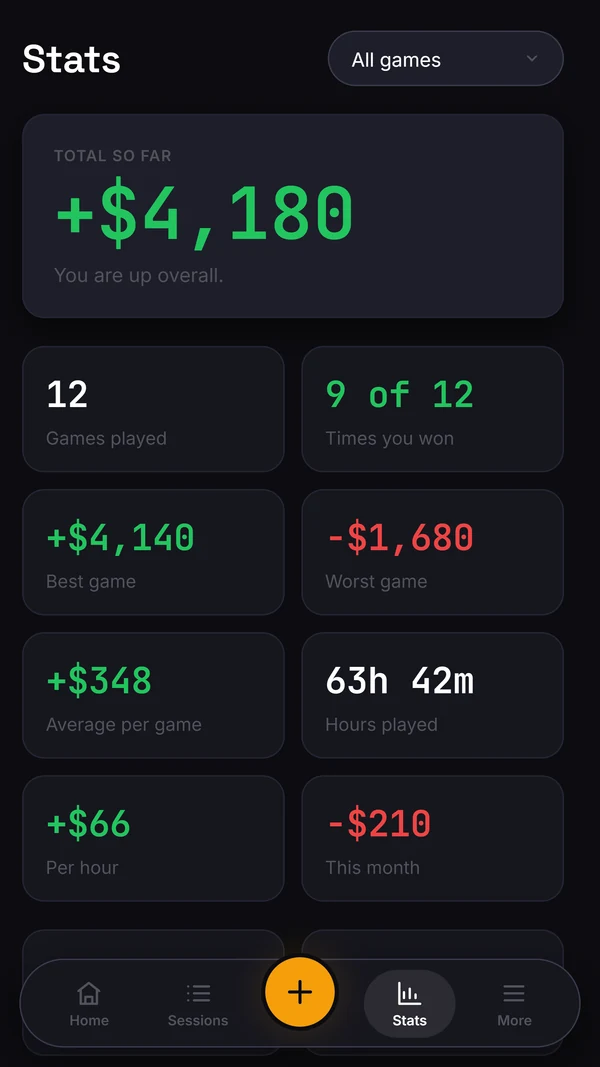
A poker bankroll tracker should show how the money set aside for poker changes through sessions, deposits, withdrawals and direct costs. The graph must separate poker profit from cash movements. Adding GBP 1,000 to the roll makes the balance higher, but it is not a GBP 1,000 win. Withdrawing money lowers the available roll, but it does not turn a profitable month into a losing one.
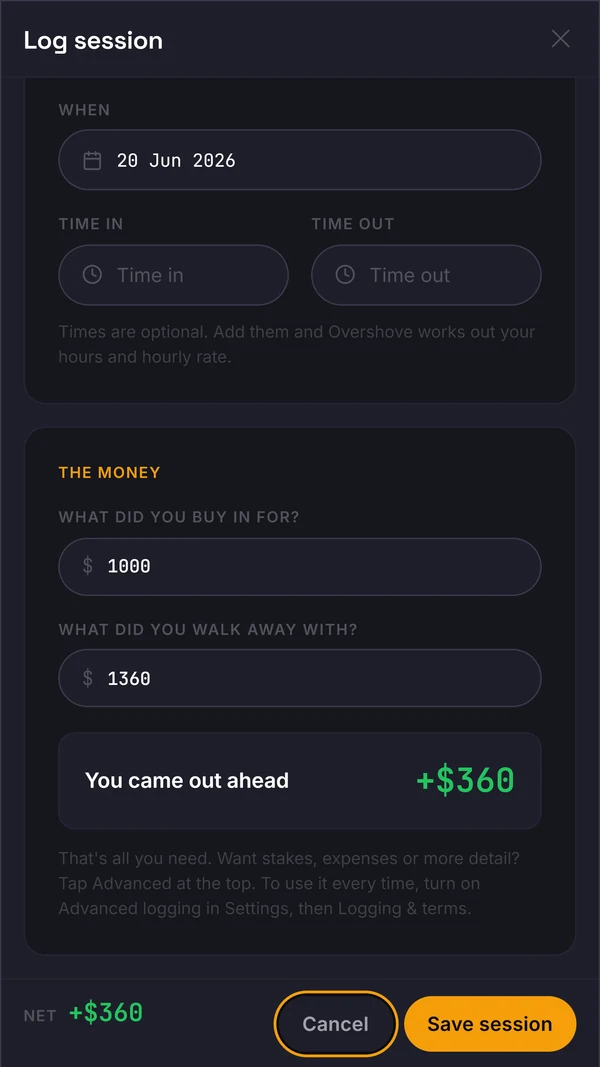
Every point should trace back to a dated record. For a session, that means buy-in, cash-out, hours, game and stake. For a cash movement, it means the amount and reason. Deduct only additional costs outside the buy-in/cash-out result. Stack-paid tips and fees are already included; separate breakdowns are context, not another deduction. If a historical field is unknown, the tracker should preserve the gap rather than replace it with a confident zero.
Overshove builds bankroll views from the sessions and movements entered by the player. It is a record and review system, not financial advice, a guarantee against ruin or proof that a displayed win rate is the player's true edge.
How should deposits and withdrawals affect the graph?
Use two related lines of thought. The account balance answers how much poker money is available now. The results line answers how much poker itself has won or lost. A deposit changes the first and leaves the second alone. A withdrawal does the reverse of a deposit. A session result changes both, unless the money is being tracked outside the bankroll.
This separation matters when a player funds a shot, takes living expenses from the roll or moves money between accounts. Without explicit movements, the graph can jump and the tracker may attribute the jump to play. Reconcile the balance periodically against the actual poker funds. If the amounts disagree, add a dated correction with a note rather than editing old wins until the line looks right.
Keep currencies and bankrolls deliberate. Mixing a dollar session with a sterling bankroll without a recorded conversion creates a false result. If the tracker supports multiple pools, use them or convert at a stated rate and date. Convenience should not erase the unit behind the money.

The true hourly, not the gross
Cash-outs minus all buy-ins already include pot rake and stack-paid tips or fees. Additional recorded costs can reduce that result, but no payment should be deducted twice. Keep table hours separate from total trip hours. Do not invent historical costs or assume the app detects duplicate deductions.
How do you turn a cash balance into buy-ins?
Divide the poker bankroll by the normal amount risked when sitting in the game. A GBP 6,000 roll supports 30 buy-ins of GBP 200 or 12 buy-ins of GBP 500. The cash has not changed, but the risk position has. That is why a bankroll should be read in the unit of the next stake, not only in currency.
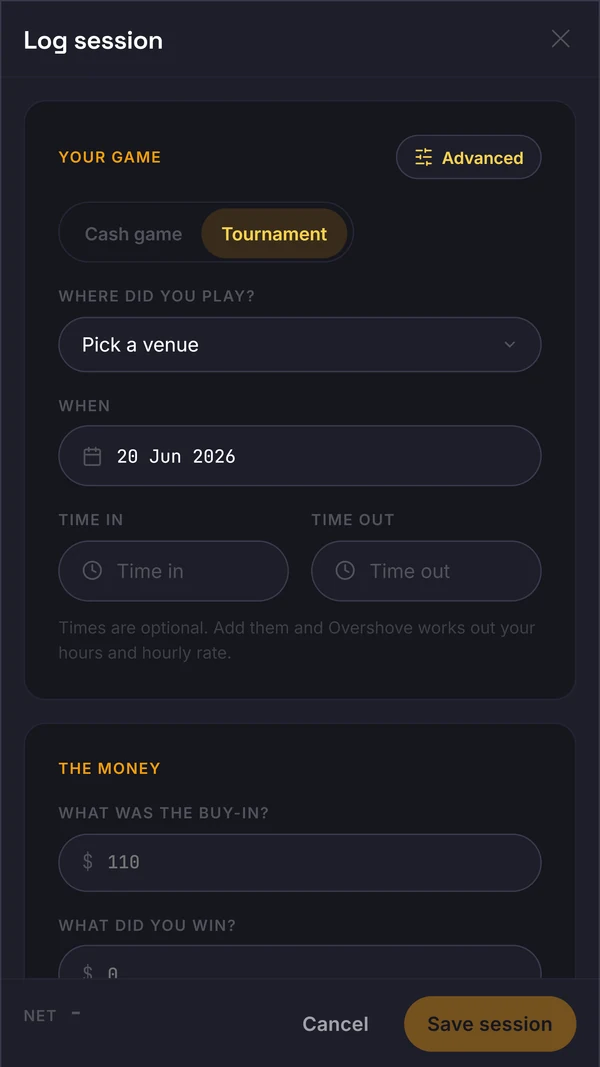
Define what a buy-in means for your game. A player who routinely sits 200 big blinds deep should not quote a 100 big blind count and assume the risk is identical. Tournament buy-ins need their own pool because field size, payout structure and re-entry behaviour produce a different distribution from cash games.
The count is a decision aid, not a universal rule. A recreational player with stable outside income and a capped poker budget may tolerate a higher chance of losing the roll. A professional depending on withdrawals needs more protection. Write the move-up and move-down thresholds for your situation before a heater or downswing changes the argument.
How should you use win rate and variance?
A bankroll rule becomes more useful when it considers both expected return and swings. A thin estimated edge with a high standard deviation needs more capital for the same target risk than a stronger edge in a steadier game. The difficulty is that the edge itself is uncertain, especially in live poker where samples grow slowly.
Do not feed a short hot run into a risk calculator and treat the output as permission to move up. Test a conservative range of win rates, including a lower estimate than the headline result. Check how the required bankroll changes. If a small adjustment doubles the suggested buy-ins, the decision is sensitive and deserves a wider safety margin.
Variance tools describe distributions under assumptions. Real games change, players change and session results may not follow the model perfectly. Use the output to set rules and understand exposure, not to promise that a downswing will stay inside a particular line.
What does an honest bankroll review look like?
Start by reconciling the current balance. Add starting funds, deposits, withdrawals and session net, then compare the result with the money actually held for poker. Investigate differences before interpreting the curve. A missing cash movement can make every later point wrong while leaving the chart visually smooth.
Next review the stake mix. Show hours, net, average buy-in and current buy-in count for each regular game. A profitable lifetime total can hide that recent play has moved into a stake where the roll is thin. Look at the largest drawdown in money and buy-ins, plus the time needed to recover. Those figures help set a move-down threshold that feels real before it is tested.
Finish with behaviour. Did the player respect the shot budget? Were losing sessions entered promptly? Did withdrawals leave enough capital for the agreed stake? Bankroll management is a system of actions. The tracker is useful when it makes breaches visible and the rule easier to follow.
How do you migrate an old bankroll history?
Download a working copy: Excel (.xlsx), Google Sheets-ready (.xlsx) or CSV header (.csv).
Preserve the original file first. Export the old tracker or spreadsheet and keep an untouched copy. Clean dates, currencies and stake names in a working copy, then import a small batch. Compare the count of sessions, total result and hours before moving the full sample.
Map cash movements separately from sessions. A starting balance, deposit or withdrawal should not become a zero-hour poker result. Keep unknown fields blank. Backfilling estimated tips or travel across old sessions may create a tidier dataset, but it turns assumptions into measurements and weakens every later claim.
After import, compare several checkpoints rather than only the final balance. Choose an early month, a known large win or loss and the end of each year. Matching checkpoints show that sorting, date formats and signs survived the move. Export the new dataset once more and confirm it remains readable outside the product. The ability to leave is part of trusting the tool.

Who is a bankroll tracker not for?
A bankroll tracker is not a substitute for a household budget, tax record or professional financial advice. Poker funds should be separated from rent, bills and emergency savings. If gambling is causing harm or money set aside for essentials is being used to play, a better chart is not the solution.
It is also not proof of skill. A rising graph can come from a short run, selective logging or a game that no longer exists. A falling graph does not identify whether the cause is variance, poor decisions, game selection or missing records. The tracker organises the evidence needed for review and keeps risk rules visible.
Overshove is designed for players who want a session-led record, cost-aware hourly and review loop. Players seeking real-time online hand statistics, a solver or an automatic feed from every poker client need a different category of tool. Choosing the narrow tool for the actual job is better than forcing one app to make claims it cannot support.
- →A bankroll graph built from every logged session, net of costs.
- →Check results and hours against the sessions you entered.
- →Use the free bankroll calculator while variance intelligence is in development.
- →Session CSV export and spreadsheet import controls are available.
Questions
Is the bankroll tracker free?
The core tracker is free with no card. After useful value, the only paid offer is a limited Founder place.
Can I import my old data?
The web app offers session spreadsheet and bankroll CSV import controls. Test a small batch first, then reconcile counts, hours and bankroll movements against your original file.
Does it work on mobile?
The current product is a web app that you can open on a phone or desktop with the same account.