A poker session tracker that earns its place
Treat the session as the unit of analysis and the numbers finally line up: net by stake, the true hourly after costs, and a bankroll that tells an honest story over time. Every higher stat, from win rate to variance, builds on the sessions you log.

What is a poker session tracker for?
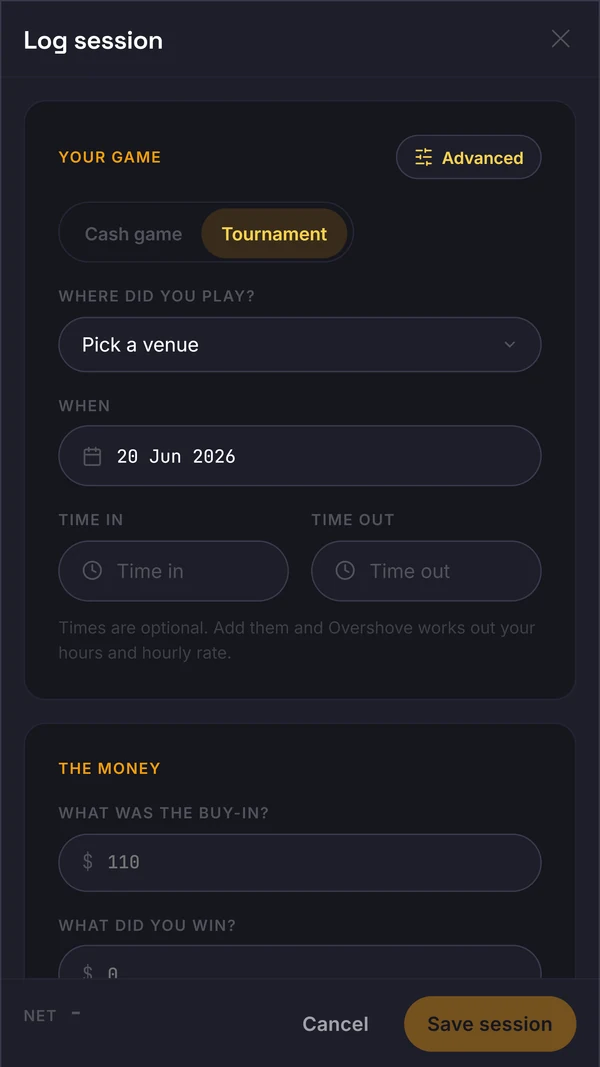
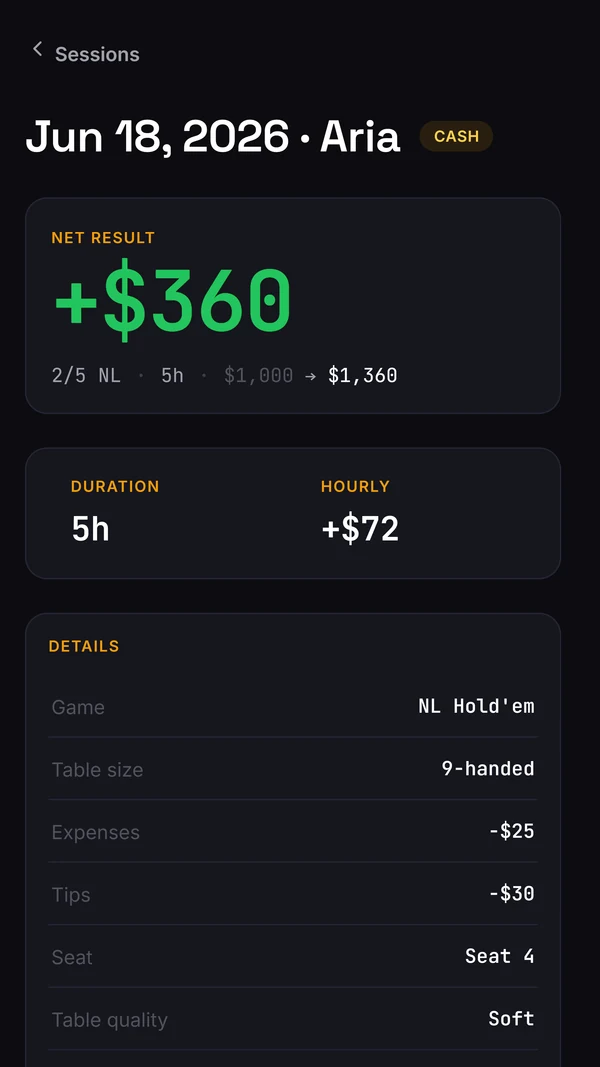
A poker session tracker turns each period of play into a record you can check later. At minimum it keeps the date, venue, game, stake, buy-in, cash-out and duration. From those rows it can calculate net results, hourly rate, bankroll movement and useful splits by stake or venue. The value is not the number of charts. It is whether every summary traces back to a complete session history.
For live poker, the tracker must be quick enough to use before, during or immediately after play. If logging requires a long form, losing sessions tend to be postponed and forgotten. That creates a biased sample. A good workflow starts with the essential money and time fields, then leaves detailed notes and marked-hand review for the cool-down.
Overshove follows that session-first model. It can organise the record and show patterns, but it cannot guarantee profit or decide whether one result was skill or variance. Those conclusions need a clean sample, enough volume and honest review.
Stats that come from the log
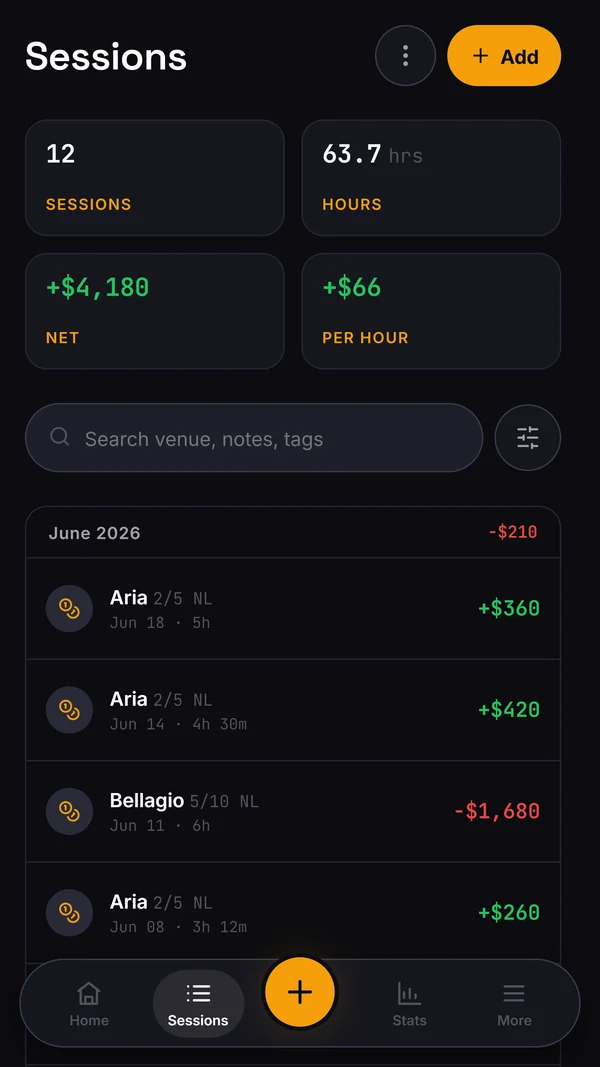
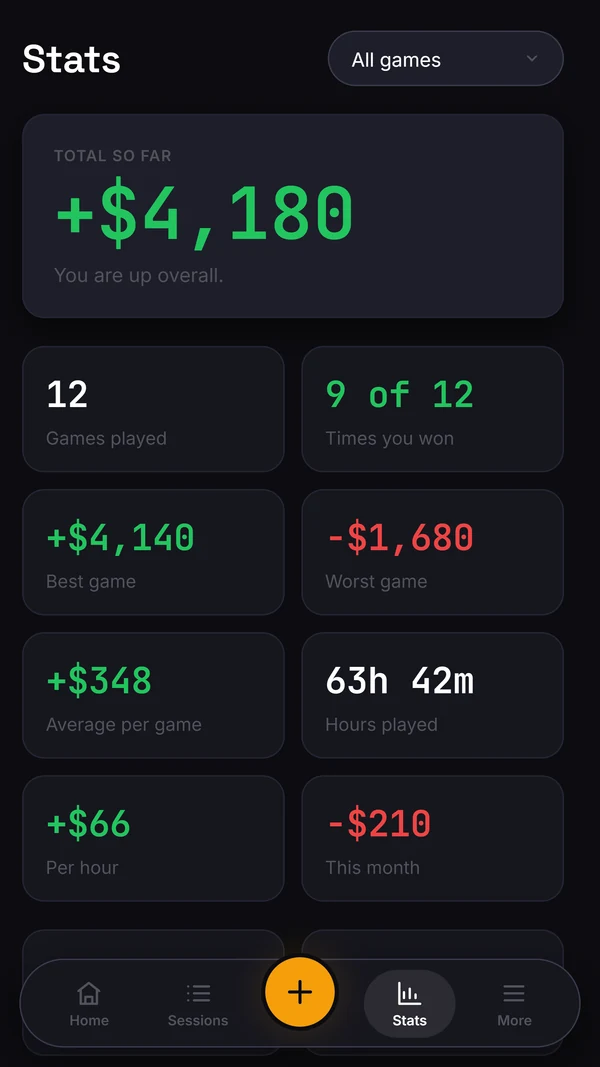
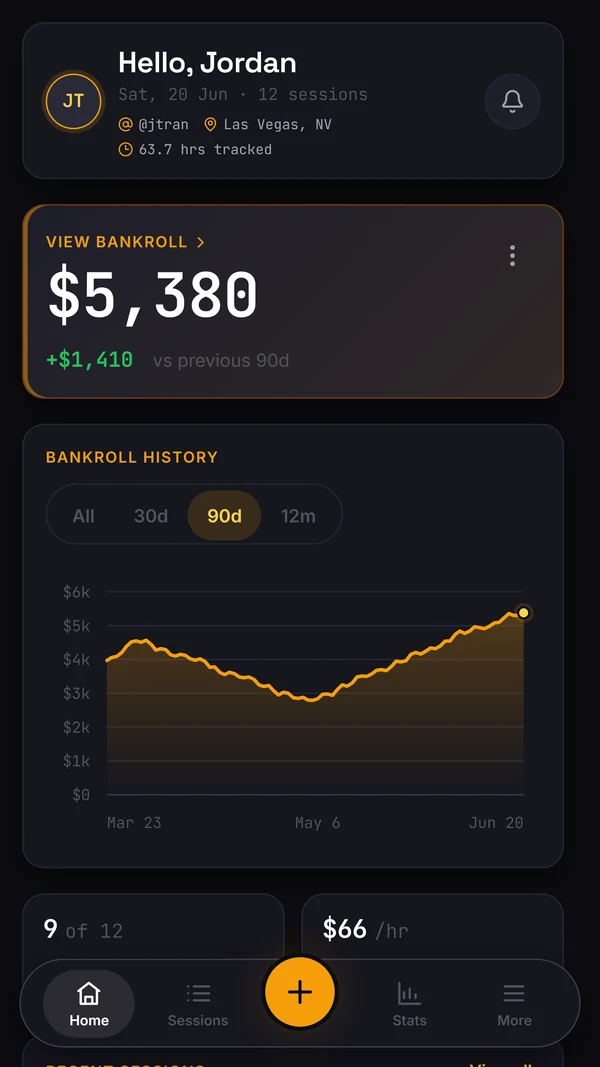
Net by stake, venue and day. The true hourly after costs. A bankroll graph that reflects reality, not a flattering subset. Every number traces back to sessions you logged, so you can trust it.
Review the sessions behind a summary
Use the session log and stats together to check the records behind a result. Keep separate notes for hands you want to study; the dedicated study and player-read modules are in development.
What a serious session record needs
A useful poker session tracker starts with the small fields that are easy to skip. Date, venue, stake, format, buy-in, cash-out and hours are the core. Useful extra fields include cost breakdowns, separately paid travel, rake structure, table quality, seat change, game type and why the session ended. Pot rake and tips or time charges paid from the stack are already included in the cash-out result; only costs outside that result should reduce it again. Those details can feel minor after one night. Across fifty sessions they explain why one room is profitable and another only looks profitable.
The main danger is not a missing chart. It is a missing loss. Players rarely skip the clean winning sessions. They skip the tired, tilted, late-night losing sessions that feel better forgotten. A tracker has to make that entry nearly frictionless, because the whole sample gets distorted when the hardest sessions go missing. This is why Overshove keeps table-side capture short and pushes the more thoughtful review work after the session.
Once the record is complete, filtering becomes useful. You can ask whether the late session is worse than the early one, whether one stake behaves differently by venue, whether short sessions are protecting your game or hiding impatience, and whether the same note appears after every bad result. Those answers do not come from a single profit graph. They come from a clean, boring session record that survives both good weeks and ugly ones.

How to review the first 25 logged sessions
After 25 sessions, do not rush to declare a final win rate. The sample is too small for certainty, but it is large enough to find operational leaks. Check completion first: every session included, no missing cash-outs, no vague notes like "bad table", and no cost fields left blank because they were annoying to enter. A complete small sample beats a glamorous partial one.
Then compare decisions rather than outcomes. Which venue produces the best hourly after travel, not just the best headline result? Which stake creates the biggest emotional swings? How many sessions ended because of a rule, and how many ended because the game went badly? Did marked hands produce actual review notes, or did they sit as reminders you never opened? The answers shape a practical next month: one cleaner schedule, one study theme, one stop-loss rule, one venue decision.
That is the real value of a poker session tracker. It gives you enough structure to stop treating every night as a fresh story. The log turns the month into evidence. You still need judgement, but the judgement starts from a record instead of mood.
How should you check a tracker before trusting it?
Reconcile the basics first. Add the session results independently and compare the total with the headline net. Check that time in and time out produce the expected duration, including a session that crosses midnight. Confirm that a cash movement, such as money added to the bankroll, does not appear as poker profit. A tracker that gets those boundaries wrong can draw a convincing but false graph.
Next test the filters. Select one stake, one venue and one date range, then inspect the underlying rows. The filtered summary should equal the visible sessions. Switch between cash and big-blind views only where the stake contains a reliable blind value. Unknown values should stay unknown instead of becoming zero and dragging an average down.
Finally, test ownership. Export the history and open it outside the product. The file should contain enough plain fields to rebuild the important totals. A polished interface is helpful, but a verifiable ledger is what makes the tracker safe to depend on over years.
What should a weekly session review include?
Review the week in a fixed order. Start with completeness: every session present, no unexplained gap in time, and costs entered consistently. Then read the money without interpretation. Record net, hours and the bankroll change. Only after the ledger agrees should you look for reasons.
Group the notes into decisions you can control. Game selection covers the venue, table and stake. Session management covers start time, duration, breaks and the reason for leaving. Technical review covers marked hands and repeated strategic tags. Mental-game review covers fatigue, tilt and any rule that failed under pressure. Keeping those groups separate stops a player using variance to excuse a behaviour leak or using one bad decision to explain a normal downswing.
Finish with one adjustment that can be observed next week. Examples are leaving after a named fatigue signal, avoiding one poor game window or reviewing every marked river before the next session. A tracker becomes useful when the review changes a decision, not when the dashboard merely gets opened.
When is the sample large enough to compare sessions?
There is no single hour count that makes every comparison reliable. The answer depends on how variable the game is, how large the true edge may be and how narrow the question is. A stake split with ten hours is fragile. A weekday comparison built from several hundred hours may still be distorted if one venue or game dominates one side.
Use small samples for operational questions. After 20 or 25 sessions you can see whether logging is complete, whether sessions run too long and whether a repeated study tag needs attention. Do not use that same sample to declare a permanent win rate or justify a major move in stakes.
As volume grows, preserve the date range and the rules used for each comparison. Games change, so a lifetime number can mix different skills, stakes and conditions. Recent and lifetime views answer different questions. The tracker should make both available without implying that either is certainty.
- →Session entry and a log you can inspect later.
- →Net by stake, venue and day, and the real hourly.
- →A bankroll graph that tells the honest story.
- →Dedicated study and player-read tools are in development.

Questions
What should I log?
Venue, stake, all buy-ins, cash-out and table hours at minimum. Deduct only additional expenses not already included, and label total-trip hourly separately. Rake/tip breakdowns and marked hands can support review.
Is it free?
The core tracker is free. After useful value, the only paid offer is a limited Founder place.