Built by a live player who got tired of not knowing.
Overshove started with a live cash question: what do the sessions actually say once you record the wins, losses and costs?

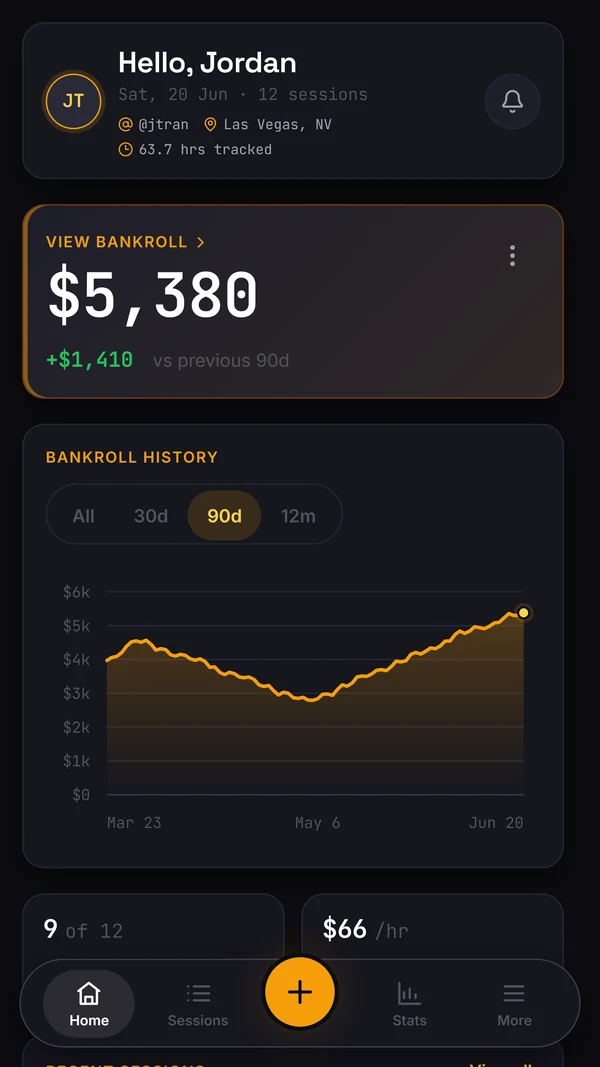
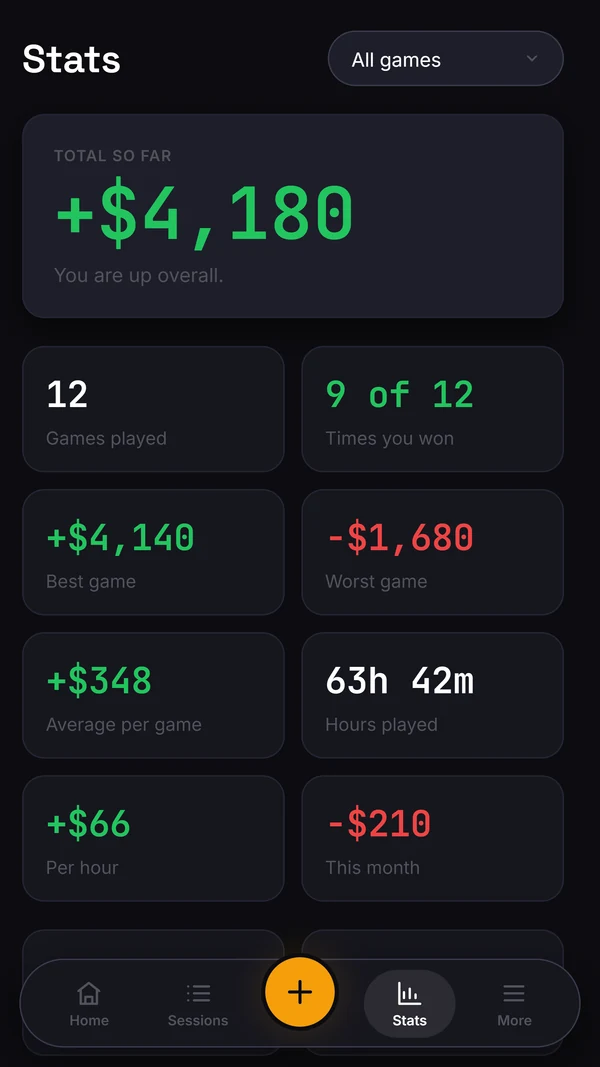
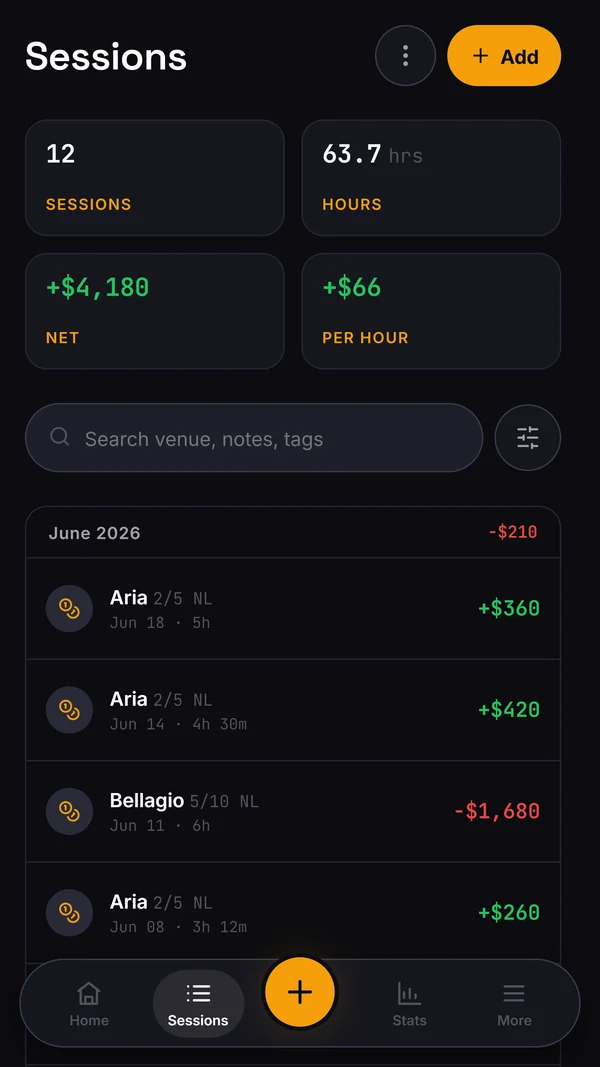
The free web app at app.overshove.com lets players log sessions, follow their bankroll and see a cost-aware hourly result. Recording losing nights matters as much as recording winning ones, because a selective log gives a misleading picture. Session and bankroll CSV exports are available from Account > Import & export.
The fuller review workflow, including in-app variance intelligence, a study log and player reads, is still in development. The tracking app is for reflection away from the table and gives no in-hand advice. The separate website study tools explain their own models and limits.

Tom Howcroft
Thomas Howcroft is Overshove’s founder and a live cash player. In an interview on 15 October 2026, he described playing since about age 18, roughly 18 years of experience at the time, and keeping a session record for the past four or five years.
He started recording every win and loss after a run of losing sessions made him question what playing was costing. Other trackers felt complicated to him. He built Overshove to keep the first session entry simple, with additional detail available when the player wants it.

What his own record changed
Tom normally logs a session within five minutes of finishing, while the money and timings are fresh. He records food and travel costs, but does not currently record tips separately. Seeing expenses alongside the results changed how he understood what remained after playing costs. The public guides explain the arithmetic with clearly labelled examples, rather than publishing his financial results.
Hourly rate and the results graph are his starting points for review. To assess a particular decision, he reviews hands with a coach, including positions, stacks, action and opponent observations. A graph records outcomes; it cannot tell him whether a hand was played well.
How we use experience and evidence
Founder experience is identified as such. Tom builds the product, so his account of why it exists is not an independent product review. Personal recommendations, illustrative calculations, current app capabilities and planned features are kept distinct. Playing experience does not make every strategic opinion established fact.
The free tools show their inputs, assumptions and model limits. A calculated result is not a prediction of winnings or a substitute for hand review. We do not attribute reviews to Tom’s coach or to other players without an actual review and permission. Questions or corrections can be sent through the contact page.
Numbers first, then the read
Lead with the figure, then the plain-English meaning. The app is a tool, not a coach with a personality.
Honest about variance
A results graph alone cannot prove an edge. Our separate variance calculator adds context while in-app variance intelligence is in development.
Your data is yours
The web app offers CSV exports for sessions and bankroll records. Check the exported fields before moving a long history.
Review away from the table
The tracking app records live sessions rather than giving in-hand advice. The separate website study tools have their own stated models and limits.