Best poker bankroll tracker apps (2026)
The best bankroll tracker depends on your game, device and logging habit. Start with this short shortlist, then compare the platforms and test the export before you move your history.
The app opens in a new tab. To create an account, choose “New here? Create an account” on the sign-in screen. Already have an account? Sign in.

Quick shortlist by job
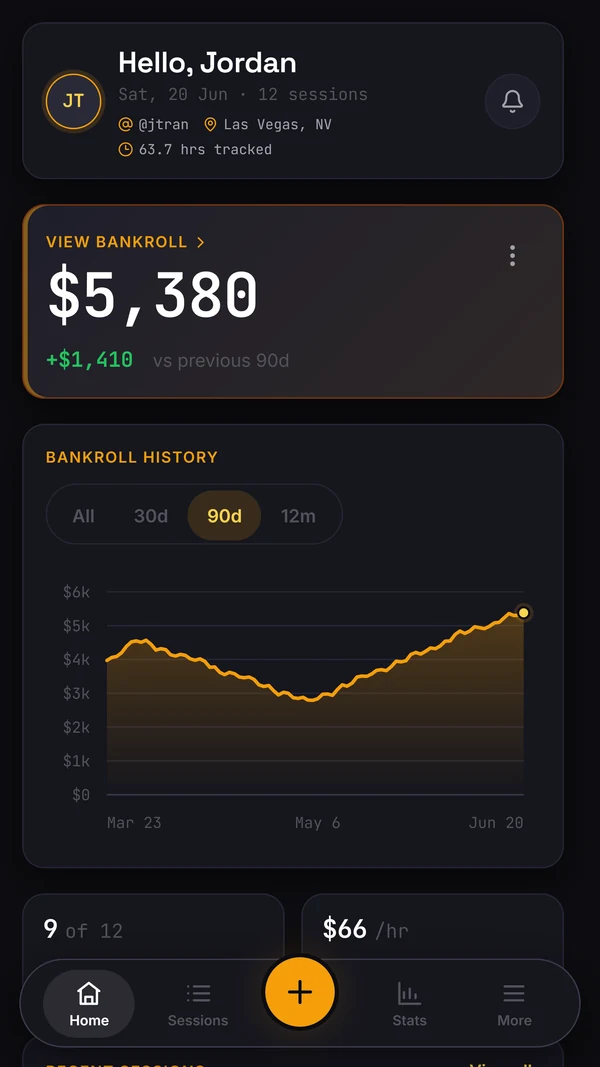
For a free browser-based live cash log with bankroll and cost-aware hourly results, try Overshove. This is Overshove's own guide, and its advanced variance and study workflow is still in development. For established native multi-bankroll and staking features, compare PokerBase. For highly customisable native statistics, compare Poker Analytics. For an iPhone app with a bundled GTO trainer, compare Bink. If you play infrequently and want a file you control, start with a spreadsheet.
These are fit suggestions, not a claim that we tested every current paid tier. Platform and feature facts below come from official product pages and public store listings checked in June 2026. Before committing a real sample, create a dummy session on your device, time the entry, and export it. Recheck current pricing and availability with the developer.
What makes a poker bankroll tracker worth using?
A poker bankroll tracker is worth using when it can tell you whether your edge is real, not merely whether you are up or down, and five criteria separate the field for live cash. Logging speed comes first, because a tracker you skip after a losing session produces a flattering sample rather than a true one. Hourly accounting comes second: cash-outs minus all buy-ins already include pot rake and stack-paid tips or fees. Deduct only additional costs outside that result, and state whether the denominator is table time or the whole trip. Separate breakdowns can explain payments without deducting them again.
Third is a variance read, standard deviation and a confidence band on your actual sample, which is what separates running bad from playing bad. Fourth is study depth, with leaks and marked hands tied back to the sessions that produced them. Fifth is data ownership: full CSV export and no lock-in, tested in your first week rather than after a thousand hours. Feature lists are easy to write; those five decide whether the numbers can carry a stake decision.

The criteria that matter, and what players actually track
Many live cash players record their results in some form but stop at buy-in and cash-out. Cash-outs minus all buy-ins already reflect pot rake and stack-paid tips or fees. A two-number ledger may lack hours, additional out-of-stack expenses and decision context. Those are separate gaps; the table result is not automatically wrong because it lacks a rake breakdown.
The spreadsheet is still a common primary tracker, and logging discipline is most vulnerable during a downswing, precisely when the data matters most. So the question is not which app has the longest feature list. It is which tool you will still be using in month six, and whether the numbers it produces are complete enough to base stake decisions on.
Five criteria separate the field: logging speed (can you log a live session in seconds, at the table, on the device in your pocket), hourly accounting (additional costs deducted once, with table or trip hours clearly labelled), a variance read (standard deviation and a confidence band on your actual sample), study depth (leaks and marked hands tied to sessions), and data ownership (full CSV export, no lock-in). Every tool below is judged on those five, not on marketing copy.
The 2026 field, compared
The table covers the tools live cash players actually shortlist in 2026, plus the spreadsheet, which is still the most common starting point. Every named-tool fact is taken from the product's official site or public store listing, checked in June 2026, and each tool gets an honest verdict on where it fits rather than a score out of ten. Several of these tools are excellent at jobs Overshove does not attempt, and the table says so plainly.
For any pairing you are seriously weighing, the head-to-head comparisons on this site go a level deeper: row by row on staking, GTO bundles, hand databases, wellness analytics and the review loop, with the same sourced, dated facts and the ties and losses left visible.
Logging speed decides whether your sample exists
Every other criterion depends on this one. A tracker only produces trustworthy numbers if it captures every session, and it only captures every session if logging is fast enough that you never skip one. The failure mode is not dramatic: you play a long Friday session, get home late, tell yourself you will log it tomorrow, and tomorrow never comes. Do that a handful of times and the sample is not just smaller, it is biased, because the sessions you skip are disproportionately the tilted, losing, would-rather-not-look ones. That failure mode means the sample flatters you exactly when honesty matters most.
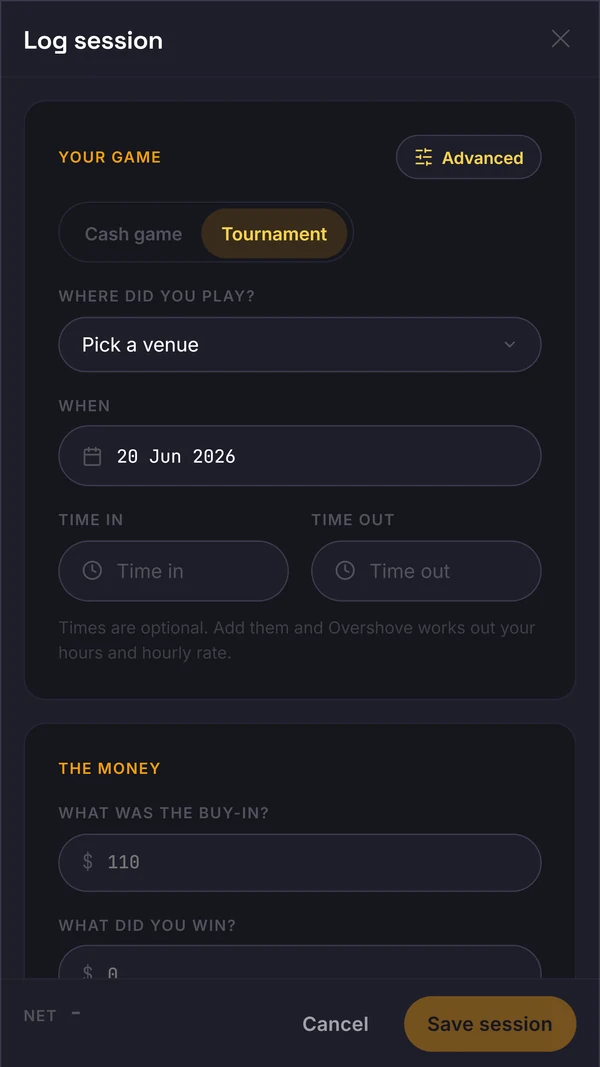
The test is concrete. Sit at a table, phone in one hand, and time a full session entry: stake, venue, all buy-ins, cash-out, table hours and any additional expenses not already included. Under thirty seconds and you will do it every time; over two minutes and month six is doubtful. Check it works one-handed on a phone, because that is where sessions actually get logged, not at a desktop three days later. And check what the minimum viable entry is: a tool that demands twelve fields before it saves anything teaches you to stop saving.
The true hourly: a worked 1/2 example
Consider a synthetic £1/£2 session: all buy-ins £300, cash-out £388, four table hours. The result is +£88, or £22 per table hour and 11 BB/hr. Assume eight won pots each had £5 of rake removed, and £1 was tipped from the stack for each: £40 of rake and £8 of tips. Both already reduced the £388 cash-out and must not be deducted again.
The separate breakdown can attribute £48 to those payments. Adding them back gives £136 before those particular deductions on the recorded outcomes; it is not a forecast of what the player would win in a different game with no rake or tips.
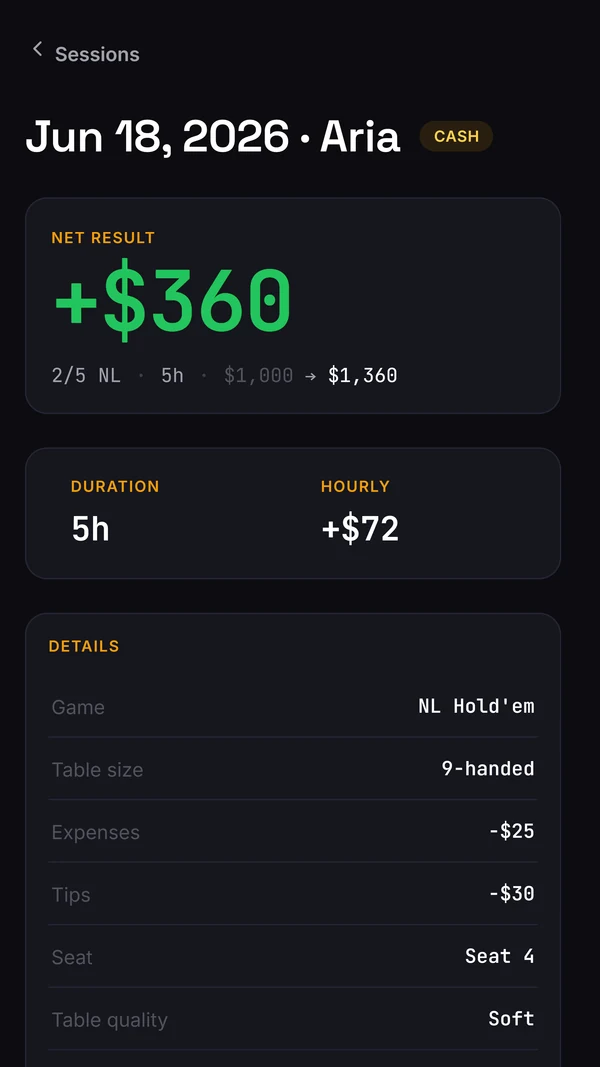
An additional £12 of fuel and parking, paid separately and not in the ledger, leaves £76 profit. Over four table hours, that is £19/hr. If the whole trip took five hours including travel, overall hourly is £76 divided by five, or £15.20. The lower overall figure uses a different time denominator; travel time does not remove more cash profit.
Check whether a tracker can record additional expenses and preserve their basis. Rake/tip breakdowns can help explain costs, but a spreadsheet or ledger can calculate the result correctly when each payment is counted once.
The variance read: running bad or playing bad
Telling running bad from playing bad is difficult because of arithmetic, not intelligence. Live full ring runs a standard deviation of roughly 80 to 120 BB/100. Take 100 BB/100 and a live pace of about 27 hands an hour. A serious year of 1,000 logged hours is about 27,000 hands, which is 270 blocks of 100. The standard error on your win rate is 100 divided by the square root of 270, roughly 6 BB/100. So an observed 8 BB/100 after a thousand hours carries a 95% interval of roughly plus or minus 12 BB/100: the same log is consistent with a small loser and a crusher. A point estimate on a live sample lies for years.
That is not a reason to stop tracking; it is the reason to demand more from a tracker than a graph that goes up. A tool that computes standard deviation from your own log, wraps a confidence band around the win rate, and tells you whether the current downswing sits inside expectation gives you an honest answer to the only question that matters mid-downswing: is this within the model, or is something actually wrong with my game? Several tools in the table surface a variance or standard deviation figure; fewer frame it as that decision. When you evaluate, ask to see the downswing view on a losing stretch, not the demo account's heater.
Data ownership: run the exit test first
Your sample is the asset. A thousand hours of clean logging cannot be re-created, so any tracker holding it is a custodian, not an owner. Before committing a year of data to an app, run the exit test: create a handful of dummy sessions, export, and open the file. Is it a complete CSV with every field you entered, or a lossy summary? Is export on the free tier, or behind a paywall? Could another tool, or a plain spreadsheet, read the file without surgery? Apps get acquired, abandoned and redesigned; the export file is the only part of a tracker you keep regardless.
The June 2026 listings give a partial picture: PokerLog exports to CSV, JSON and XLSX, and PokerBase supports CSV import and export. Overshove's web app visibly offers session and bankroll CSV import and export on the free core. We have not verified how every source column maps on import or survives a round trip, so test with a small copy of your data first. For the rest, check the current listing, because export options are exactly the kind of feature that shifts between versions.
The spreadsheet remains the benchmark here: nothing owns your data more completely than a file on your own drive, and any app should get as close to that as a hosted product can. The import side matters just as much. A tracker that maps your existing spreadsheet columns once and keeps the full history lets you switch without amputating the sample, which is the whole reason the sample is worth having.
Who should pick what, and when a spreadsheet is enough
Routing by need, using the June 2026 facts. If you stake or get staked, or want social sharing inside a polished native app today, PokerBase fits. If you want GTO preflop charts and an AI assistant bundled next to the log, that is PokerLog's pitch. If the job is a searchable database of live hands rather than results, Fastroll is built for exactly that and pairs naturally with a results tracker rather than replacing one. On iPhone, Left Pocket adds a health and mood layer and Bink bundles a GTO trainer with deep stats; both are Apple only. If maximum stat customisation matters, Poker Analytics is one of the most customisable trackers around, on iOS, Android and Mac.
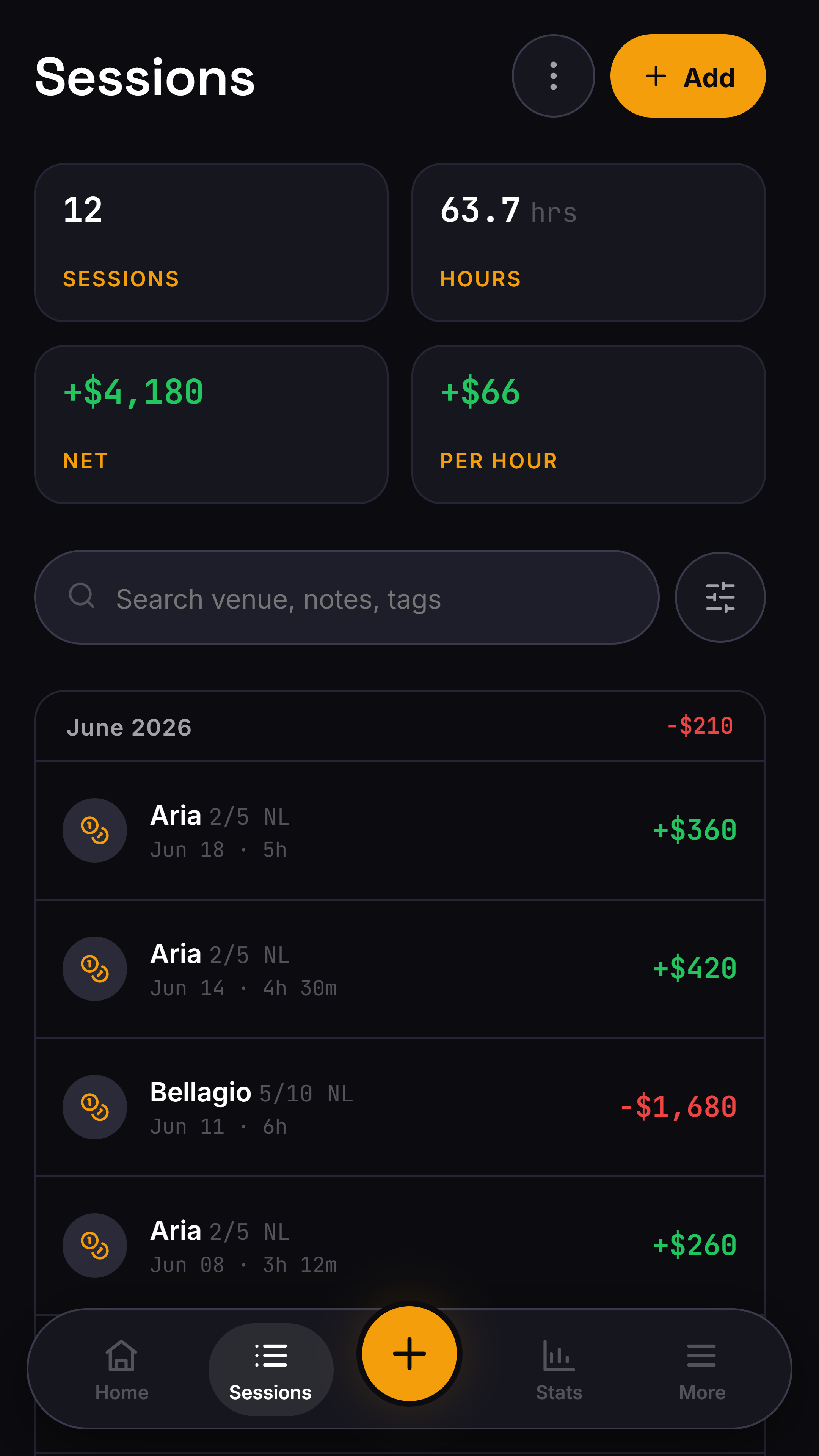
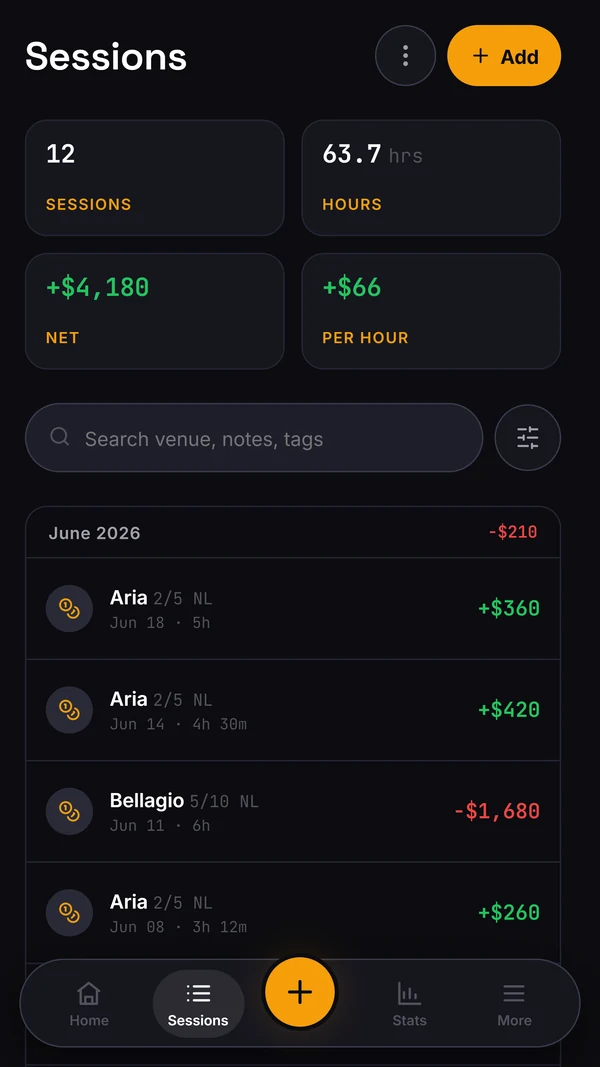
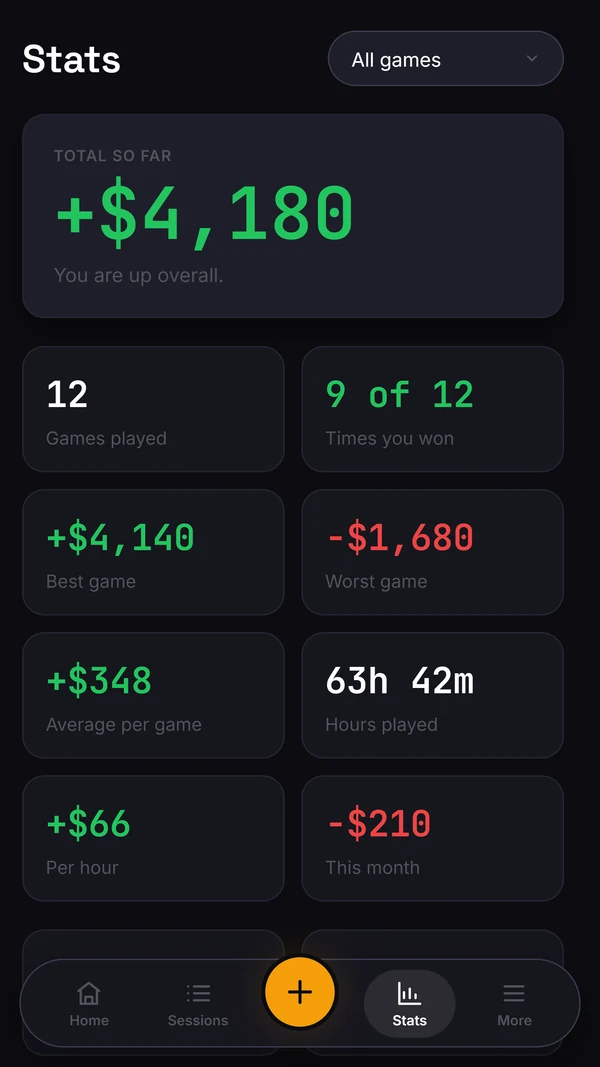
Overshove's current pitch is narrower. The free web tracker works on a phone or desktop and is built around a live cash session record, bankroll and cost-aware hourly. Session and bankroll CSV exports are available; check field coverage before relying on them for a move. Variance interpretation, player reads and the fuller study loop are in development, so do not choose Overshove today on the assumption that those tools already exist. There is no GTO chart bundle, AI assistant or HUD. If those extras are what you want, choose a tool that has them now. The head-to-head comparisons on this site set each pairing out row by row, ties and losses included.
And the spreadsheet? If you play a few sessions a month and want a rough net, it is genuinely enough. Total ownership, zero cost, infinite flexibility. Its failure points are specific: manual entry erodes logging discipline (the missed-session bias above), additional expenses and their treatment need consistent columns, and any variance mathematics must be maintained. The switch point is not a calendar date. It is the moment you catch yourself making a stake or shot-taking decision off the spreadsheet's number, because a point estimate needs a complete sample and explicit cost/time definitions. Test whether another tool improves that record; a consistent spreadsheet can remain correct.
Sources
Product facts checked against first-party pages and developer-supplied store listings on 5 August 2026.
- →Logging speed, can you log live in seconds?
- →Check how an app counts tips and travel
- →Ask whether variance uses your real sample
- →Check whether study tools are live or planned
- →Test CSV export and import with sample data

Questions
What is the best free poker tracker?
Look for a genuinely free core that still captures the true hourly and exports your data. Overshove’s core is free, and its optional Founder offer appears only after useful value.
App or spreadsheet?
A spreadsheet works at low volume; a purpose-built tracker wins on logging discipline and the true-hourly fields as you get serious.
Which of these trackers run on both iPhone and Android?
Per the June 2026 store listings: PokerBase, Fastroll and Poker Analytics list both platforms, while Left Pocket and Bink are Apple only. Overshove's Android app is live on Google Play in the UK, US, Canada, Australia, Ireland and New Zealand. iPhone users use the web app at app.overshove.com; there is no iOS app yet. Listings change often, so confirm before committing a sample.
How many hours before my win rate means anything?
At a standard deviation of 100 BB/100 and roughly 27 live hands an hour, 1,000 hours is about 27,000 hands, which still leaves a 95% interval of roughly plus or minus 12 BB/100 around your observed rate. Direction firms up long before certainty does, so log everything and check the uncertainty rather than trusting the point number alone. Overshove's in-app confidence band is still in development.
Rake already comes out of the pot, so why record it separately?
The cash-out-minus-all-buy-ins result already includes pot rake. A separate breakdown can explain costs, but it must not be deducted a second time. Compare room structures alongside game quality and the actual sample; an add-back alone does not predict a different room.
Can I run two of these tools together?
Yes, and one pairing is natural: a hand database such as Fastroll for spots, alongside a results tracker for sessions, bankroll and the review loop. They answer different questions, which hand was that versus how am I really doing.