Logging live without being that guy
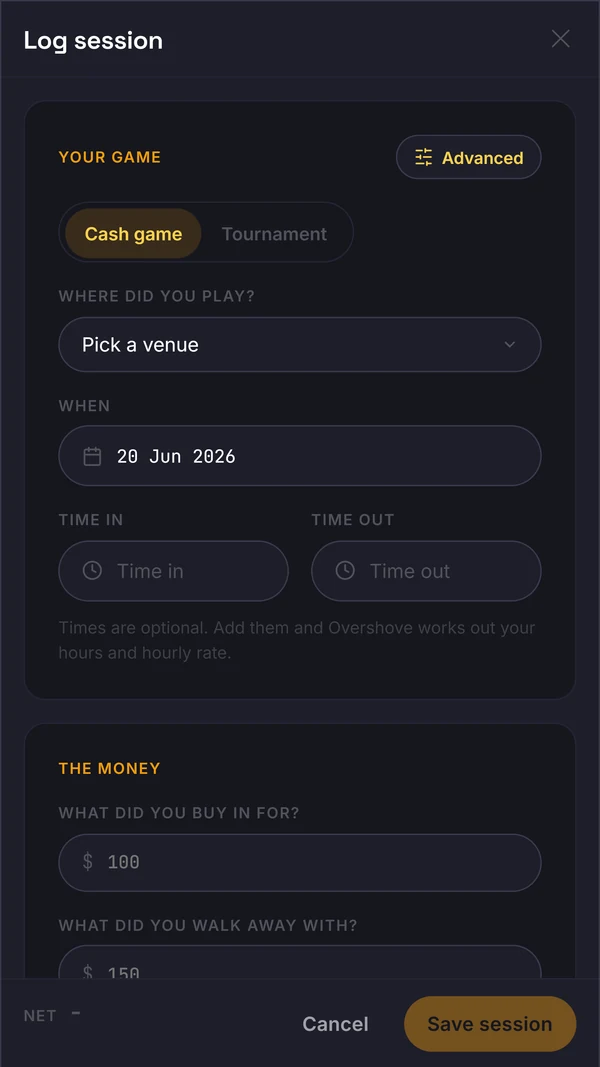
Tom normally enters a cash session within five minutes of finishing, while the times, money and food expenses are still fresh. His beginner checklist is short: total money put in, total money taken out and playing time. The detailed log can wait until you have left the game.
A founder's routine, not a five-minute rule
Thomas Howcroft, known as Tom, described this habit in a cash-game interview on 15 October 2026. He is Overshove's founder, so this is his own experience with a disclosed product interest. Within five minutes is when he normally records a session, not a measured optimum, a promise about entry speed or a requirement for every player. The practical idea is to record the essentials promptly, before the details become harder to reconstruct.
- Money inFirst buy-in plus every rebuy and top-up
- Money outFinal cash-out plus anything taken out earlier
- Playing timeStart, finish and breaks
- Extra costsFood or travel paid from separate money
First, reconcile the money
Record all the money you put into the session: the first buy-in plus every rebuy and top-up. Then record all money taken out, including any earlier withdrawal as well as the final cash-out. The difference is your table result. A simple check is to list each buy-in separately before adding the total, so a late rebuy does not disappear from memory. Keep any remaining chips accounted for consistently when closing the session.
Try it: reconcile a session
Enter every buy-in and everything you took out. The tool shows the table result, and how far off it would be if a rebuy went missing from the record.
Counting only the first buy-in would record +£220, overstating the result by £100.
Invented figures. Remaining chips at the end of a session belong in the final cash-out. Poker session tracker.
Next, record playing time
Note the start and finish times and account for breaks consistently when calculating playing hours. If you also want a door-to-door hourly, keep travel and waiting time distinct from time spent playing. An uncertain start time is an estimate, not an exact measurement. Label it accordingly rather than making the record look more precise than it is.
Add the expenses you actually know
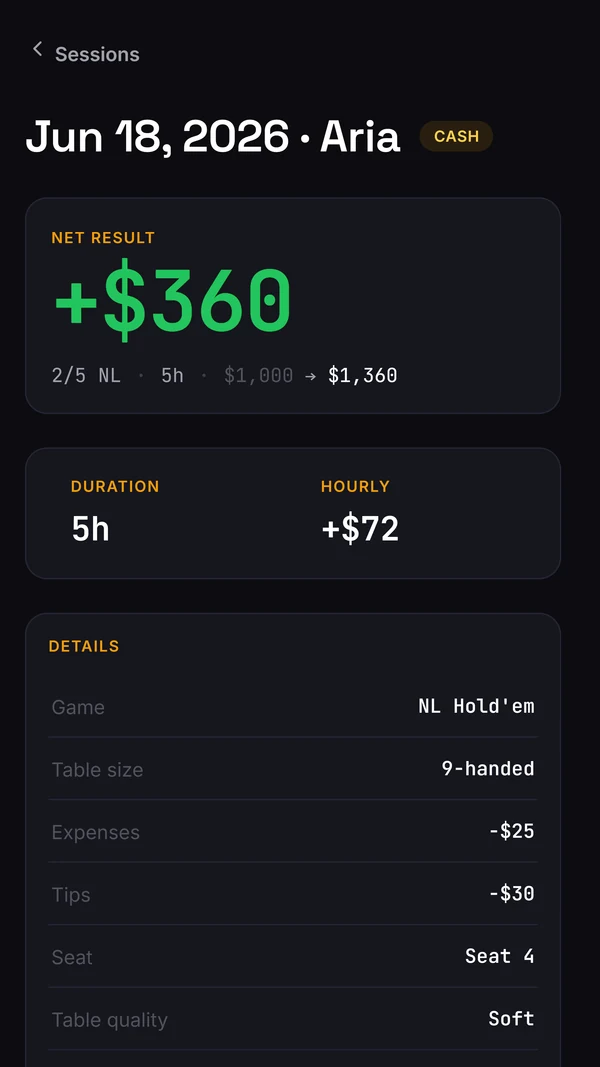
Tom records food and travel, but does not currently record his own dealer or staff tips separately. You can choose a repeatable expense scope that suits your review. Check receipts or other records where available, and leave a missing amount marked unknown. Rake and tips already paid from the playing chips are reflected in cash-out; do not subtract them again when adding expenses paid from separate money.
Keep the phone from interrupting play
If you need a reminder of a rebuy or start time, make a brief note at a suitable break without holding up the action, and respect the room's phone rules. Save the detailed entry and any hand reconstruction for after play. You do not need to write an account of every hand at the table to maintain a useful record of money and time.
Record the losing sessions too
Use the same essentials after a loss as after a win. Omitting losses changes the sample you later review. If a detail has already been forgotten, keep the gap visible and correct it when you have evidence. A session log can help you understand the cost of a hobby as well as review results; it does not have to produce a strategy lesson every night. Results alone cannot tell you whether a particular call or fold was good.
Keep hand review separate
A private note about a hand you want to revisit can support a later review, but it is a separate task from recording the session result. Dedicated in-app hand notes and study areas are planned, rather than live features described by this checklist. This routine depends only on keeping an accurate record of the basic numbers, wherever you currently record them.
Key takeaways
- Record total in, total out and playing time first; the detail can wait.
- List every buy-in separately so a late rebuy is not lost.
- Log losing sessions exactly as you log winning ones.
Questions
What should I record after a poker session?
At minimum, every buy-in including rebuys and top-ups, every amount taken out and your playing time. Add the game, stake and venue, and any expenses paid from separate money. Mark anything you are unsure of as an estimate.
How do you keep track of live poker sessions?
Use one method you will keep up, whether an app or a spreadsheet, and enter each session soon after you finish. Reconcile the money first, then the time, then extra costs, and check your totals against the money you actually have.
Should I record losing sessions?
Yes, in exactly the same way as winning ones. Leaving out losses makes your results and hourly look better than they are, which can lead to poor decisions about stakes and bankroll.
Can I use my phone at a live poker table?
Rooms set their own rules, and some restrict phone use while you are in a hand. Make any quick note at a natural break without holding up the game, and do the full entry after you leave the table.