Overshove vs a poker HUD
A HUD shows real-time opponent stats over an online table. It is impossible live, and it answers a different question. Overshove is not a HUD by design, it is built for review away from the hand.
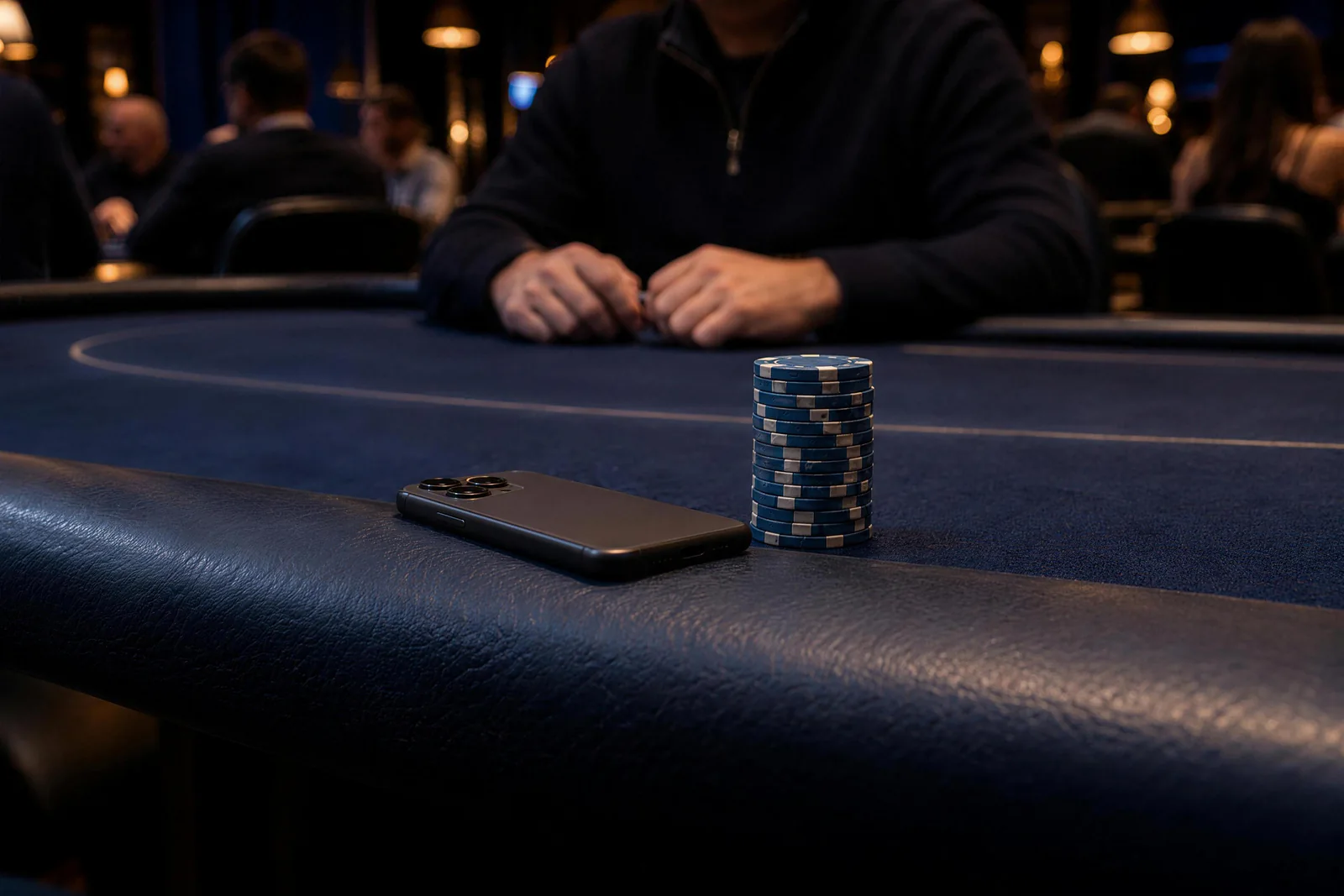
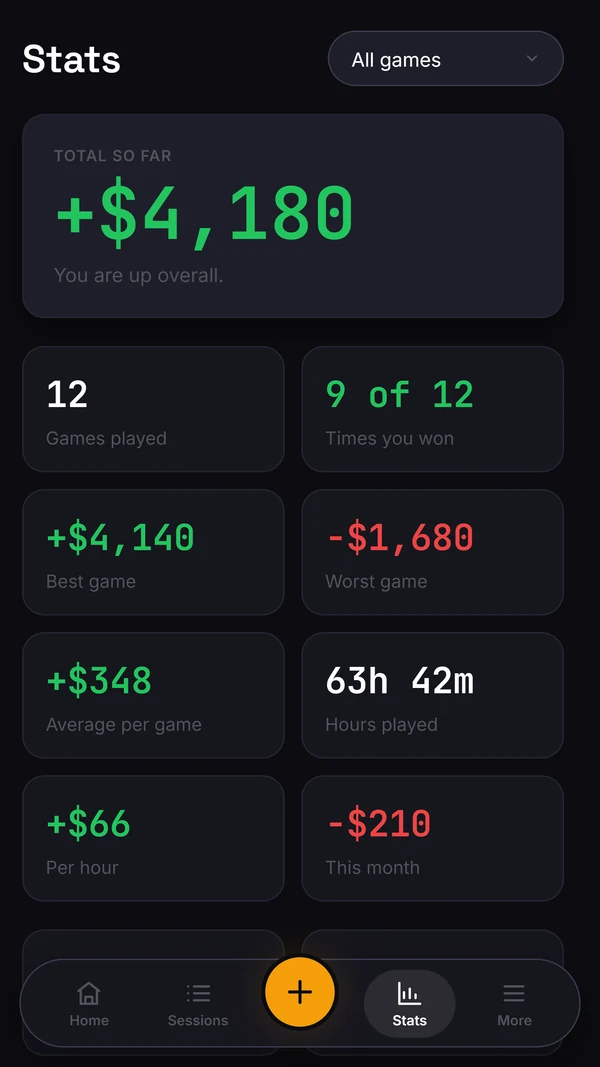
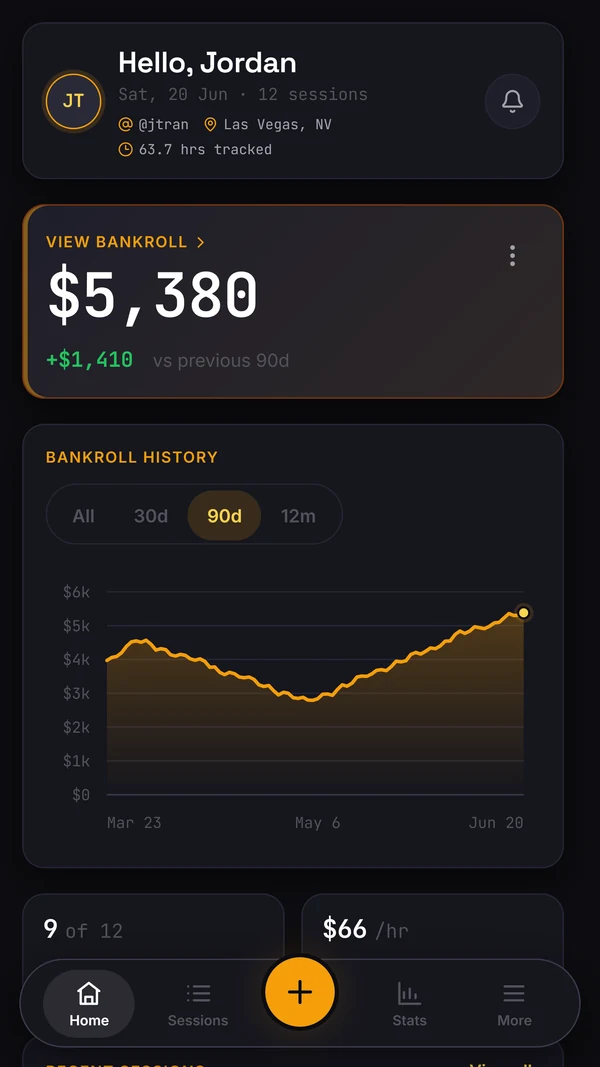
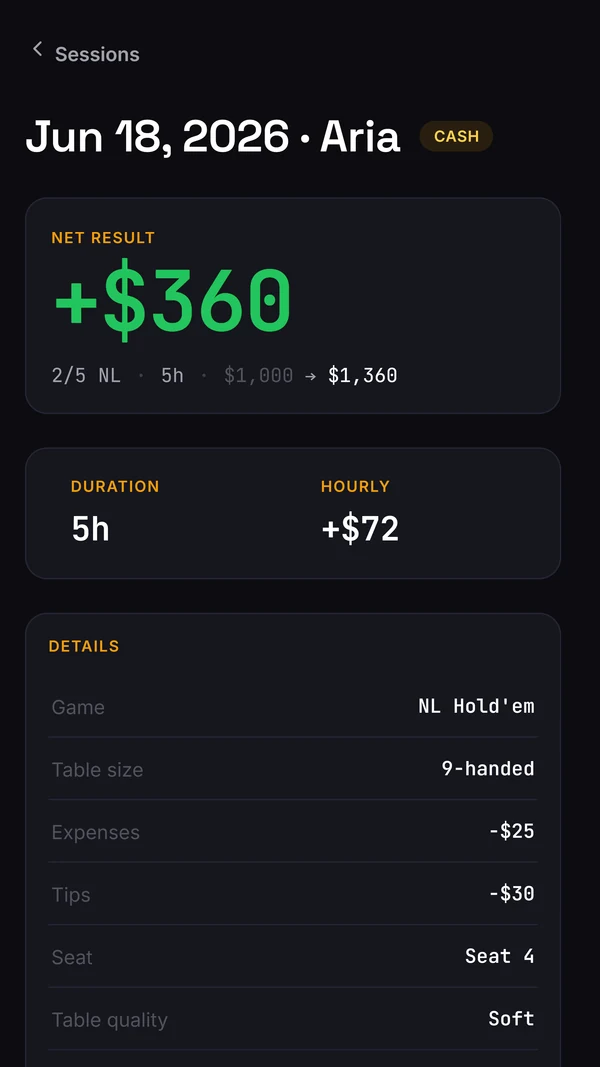
Is Overshove a poker HUD alternative?
Overshove is a poker HUD alternative only if the problem you are trying to solve is live review, not in-game online overlays. A HUD gives real-time opponent frequencies on an online table. Overshove does not do that, does not give in-hand advice, and is not designed to replace a HUD for multi-table online play.
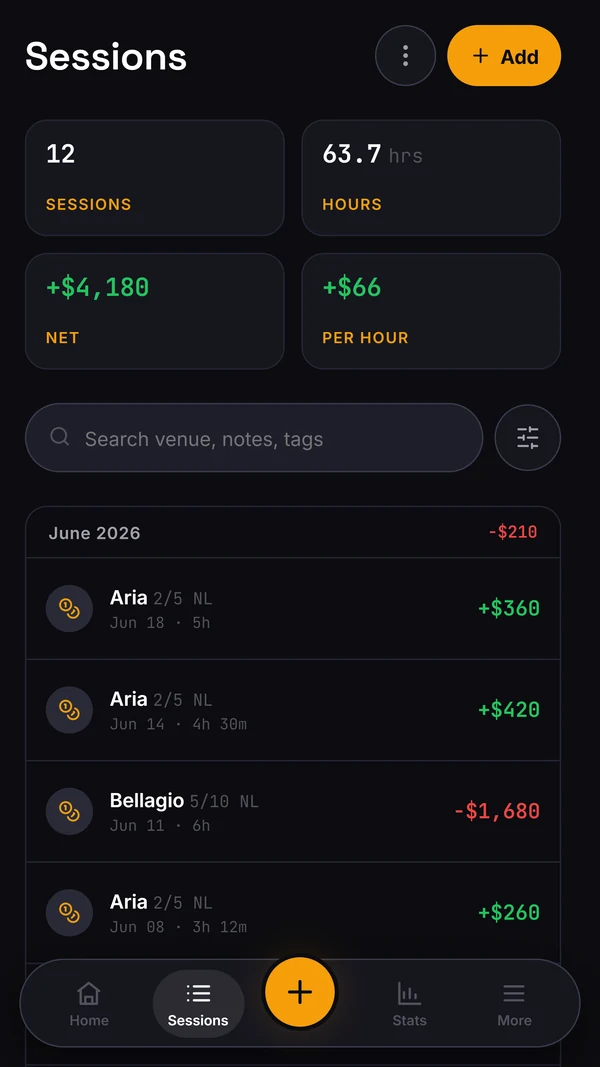
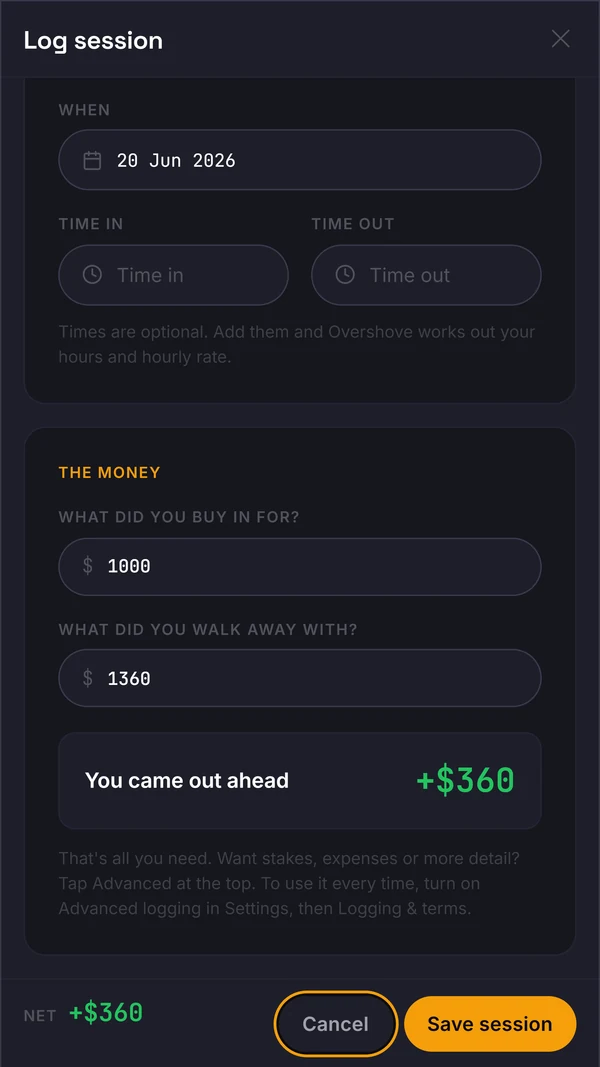
It is an alternative path for live cash players because live poker has no hand-history feed, no stable per-opponent sample at online speed, and no legal or practical way to run a screen overlay at the table. The live job is different: log the session, calculate the true hourly, review the logged result and costs; variance interpretation and private player reads are in development. If you need online opponent stats, keep the HUD. If you need to understand your live cash sample, use a review tool.
Poker HUD alternative checklist for live players
A poker HUD alternative for live play should not pretend to show real-time opponent frequencies. That promise is the warning sign. The live replacement job is narrower and more useful: capture the session, preserve the hand or read that mattered, show whether the bankroll result is inside normal variance, and make one study action obvious before the next session. If a tool does those jobs, it is a live review alternative. If it claims to be a live HUD, ask where the hand-history feed is coming from.
Use four checks. First, does it separate live review from in-hand advice? Anything giving advice during a hand creates practical and room-policy problems. Second, does it track the hourly with an explicit cost basis and additional expenses deducted once? A HUD never had to answer that because online hand histories already know the pot flow and the site environment. Third, does it support player reads in plain language, not fake frequencies? Live player pools repeat enough for good notes to matter, but not enough for stable HUD-style numbers on every line. Fourth, does the study loop connect to the sessions you actually played? A review tool earns its place after the cash-out, not while the dealer is waiting.
That is the honest place for Overshove. It is a poker HUD alternative for live players who need structure after the session. It is not an online HUD replacement and it should not be judged as one.

What a live poker HUD cannot know
A live poker HUD cannot know the preflop action unless someone records it. It cannot know positions, stack sizes, bet sizes, river actions or showdowns unless a person enters them. It cannot know that a player just changed mood after losing a pot, that a table got worse when the splashy player left, or that a line is meaningful because this exact regular took it twice last month. The information live poker gives you is slower, messier and more human than an online hand history.
That does not make software useless. It changes the job. Instead of drawing a number over a seat, the tool should protect the facts you can actually collect: what game you sat in, how long you stayed, what it cost to play, which hands deserved review, what reads looked reliable, and whether the result was inside the variance model. Those facts are enough to improve if they are collected consistently.
This distinction matters for searchers comparing a poker tracker vs HUD. The question is not which category is better. It is which data source exists in your game. Online tables create hand histories, so HUDs can work there. Live tables create sessions, notes and patterns, so the review system has to work from those instead.
Where a HUD genuinely earns its place
Be honest about what the category does well. A HUD does one job superbly: it overlays opponent frequencies on an online table while you play. VPIP, PFR, 3-bet, fold to c-bet, updated hand by hand, across samples far bigger than anyone can hold in their head. For an online player running four or more tables it is a genuine edge. It turns anonymous screen names into frequencies you can attack, and it catches deviations you would otherwise never see at that pace. Nothing in the live world replicates that, and Overshove does not try to.
But the question many live players are actually stuck on is a different one: whether a losing stretch is running bad or playing bad. A buy-in and cash-out log cannot answer it. Those are not in-game problems. No overlay fixes them, because they live in the review: the variance read, the hourly after additional recorded costs, the leak you keep repeating at one stake. A HUD is an in-game tool for online decisions. This gap is an off-table one.
Why the HUD model fails at a live table
A HUD is downstream of a data feed. Online, the site writes a hand history for every hand dealt: positions, actions, sizings, showdowns. HUD software parses that file as hands finish and paints the numbers on screen. Live poker produces no such file. There is no hand history, no timestamped action log, no machine-readable anything. The model does not degrade live. It has no input at all.
Even if you hand-logged every hand yourself, the arithmetic kills it, which the next section works through. Live full ring deals roughly 25 to 30 hands per hour, and you only share a table with any given opponent for some of your hours. HUD stats need samples in the thousands before they stabilise; live, you collect them in the dozens. What live gives you instead, and online mostly does not, is the same physical pool week after week. The same regs, the same lines, the same timing patterns. That is a notebook problem, not a frequencies problem. Overshove's player reads notebook and study log are in development; it does not offer an overlay.
The sample maths, worked through
Take the midpoint of live dealing speed, 27.5 hands per hour, and a regular you share one five-hour session with each week. That is 27.5 x 5, about 137 hands of shared play per week. Line that up against what HUD-style frequencies need before they mean anything.
Seven weeks of perfect attendance for a stable VPIP alone. Well over a year for positional numbers, and that assumes the reg never changes tables, seats or schedule. The premise collapses at live speed. Contrast the maths that does work live: variance. Say you win 7 BB/hr with a standard deviation of 90 BB/100 hands, typical for live full ring. At 27.5 hands per hour, the per-hour standard deviation is 90 x sqrt(27.5/100), about 47 BB.
Over a 100-hour month that gives an expectation of 700 BB with a standard deviation of 47.2 x sqrt(100), about 472 BB. A breakeven month therefore sits about 1.5 standard deviations below expectation, roughly a 7% shot, so a genuine winner putting in 100 hours a month should expect one most years. That single calculation is what separates running bad from playing bad, and it needs a session log with hours and stakes, not an overlay.
Combining them, and what migration actually looks like
If you play both live and online, this is not a switch, it is a split. Keep the HUD for the online volume; it is doing a job Overshove deliberately does not do. Point Overshove at the live grind: fast session capture, hourly after additional recorded costs, the bankroll view and CSV export; variance interpretation, leak tags and player reads are in development. Two tools, two data realities, and no overlap worth fighting about.
Migration in the literal sense barely applies, because a HUD database is per-hand online data and Overshove logs live sessions. There is no hand-by-hand import today; online hand-history import is planned after the live core. What many live players actually migrate from is the spreadsheet sitting next to the HUD. That path is one step. Export to CSV, import once, keep the whole sample, because the sample is what makes your win rate and variance numbers trustworthy. If you want one combined view of your hourly across formats, log online sessions in Overshove as plain session entries, date, stake, hours, result, while the HUD keeps the per-hand detail on its side.
Who should not switch
If your volume is overwhelmingly online cash and your edge leans on multi-table exploits built from opponent frequencies, keep the HUD and skip Overshove for now. A review-first live tool adds little until you have live hours worth reviewing. The same goes for online MTT grinders living in late-reg and ICM spots; nothing here targets that game.
Be equally clear-eyed about where Overshove stands. It is live on Google Play for Android and at app.overshove.com in phone and desktop browsers; no iOS or Windows app is available. The core tracker is free, with a Founder offer for paid features. It gives no in-hand advice, it is not a solver, and no tracker moves your win rate by itself; the review loop only pays if you do the reviewing.
If what you actually want is software that tells you what to do while the hand is live, no tool can do that at a live table, and Overshove will not pretend to. The honest pitch is narrower than the category fight suggests: if live cash is a serious part of your game, the HUD was never an option there, and cost-aware session tracking is useful now; deeper review is in development.

Sources
Product facts checked against first-party pages on 5 August 2026.
- PokerTracker, first-party HUD and online hand-history product context
A workflow comparison against a category of tool, not a claim against any specific product. Overshove does not replace HUDs, solvers or online databases.
Does Overshove give in-game advice?
No. It is not a HUD or solver and gives no in-hand advice, it is built for review away from the table.
Can I use it for online too?
Live cash comes first; online hand-history import is planned later.
Can I import my HUD database into Overshove?
Not hand by hand. A HUD database is per-hand online data and Overshove logs live sessions, so there is nothing to map directly. The session spreadsheet import control is visible, but mapping and history fidelity still need testing, and online hand-history import is planned once the live core is done.
Do HUD-style stats work if I take notes on live opponents myself?
The frequencies never stabilise. At roughly 27 hands an hour you would need seven-plus weeks of shared tables just for a stable VPIP on one opponent. Written reads on specific lines and showdowns carry far more live signal per hand, which is what the Overshove notebook is built around.
Will a card room mind me logging sessions at the table?
Rooms set their own phone policies, so check with the floor. In practice, capture takes a few seconds between hands or after you rack up, and nothing in Overshove watches opponents or runs during the hand.