Reading the same faces
If you regularly encounter the same opponents, a short factual note can give you something concrete to revisit. The useful starting point is what happened in a particular hand. It is not a permanent description of the player or a guarantee of an edge next time.
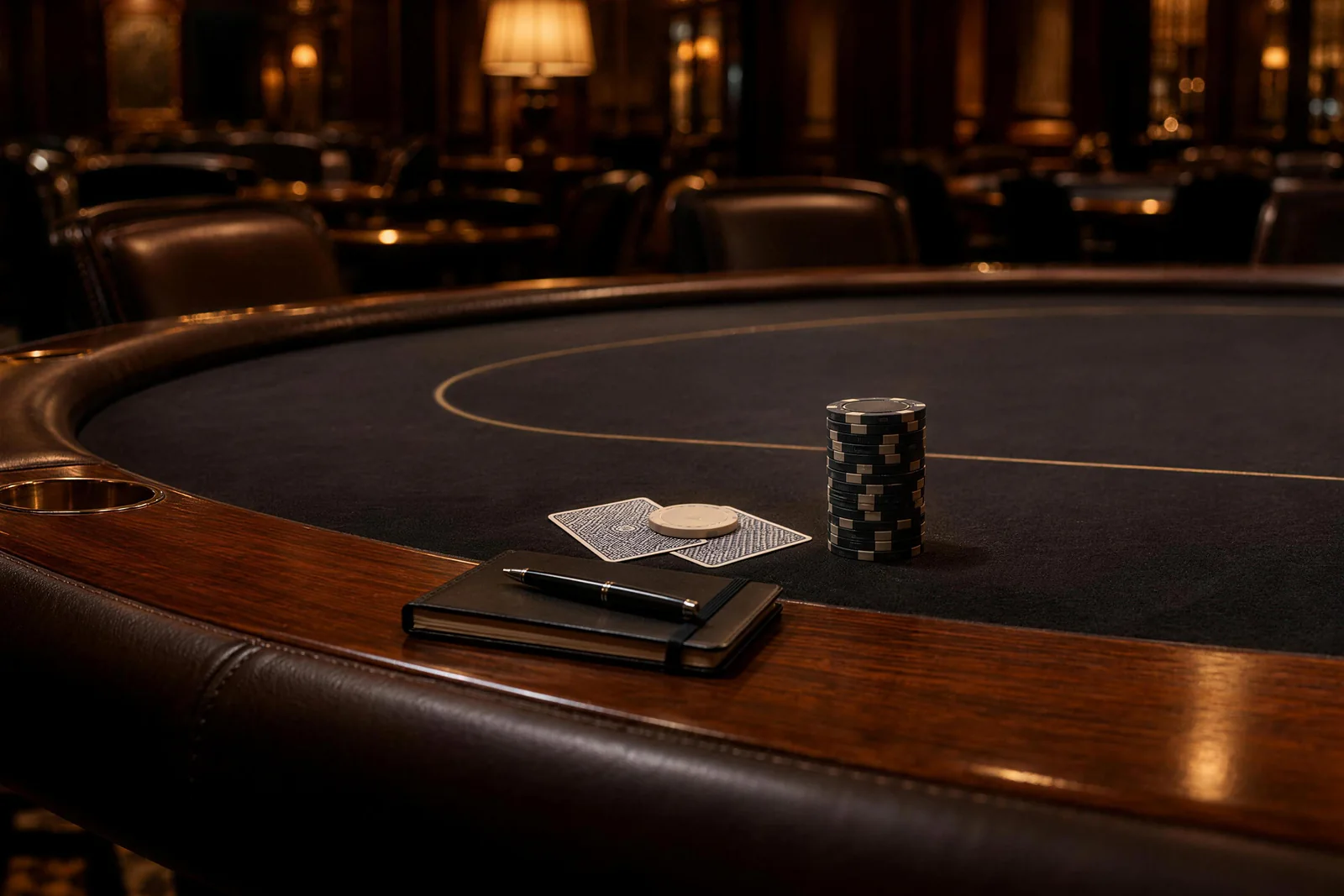
Write the observation before the label
A hypothetical note might say: called a half-pot river bet with second pair on this board, after this sequence of action. That is more specific than never folds. Include the cards and amounts you actually saw, and mark anything you are unsure about. One call does not establish what someone would do against a different bet size, board or opponent.
- Observation
- Called a half-pot river bet with second pair on K♠ 9♦ 5♥ 4♣ 2♠, after checking the turn.
- Context
- £1/£2 cash, about 100 big blinds deep, in position. Date and seat recorded.
- Question to test
- Would they call a larger river bet in a similar spot?
Keep the context that could change the interpretation
Date, game, stake, position, effective stacks, board and action can help reconstruct a hand later. Record an observation separately from your proposed explanation. If you did not see the cards, do not turn a guess about the hand into a showdown fact. A seat number belongs to that session; it does not reliably identify the same person on another visit.
Try it: observation or label?
Sort each note. An observation records what happened in a hand; a label is a conclusion that needs more comparable evidence.
Called a half-pot river bet with second pair on K♠ 9♦ 5♥ 4♣ 2♠.
Never folds.
Raised from the button three times in the first orbit.
Is a maniac.
Showed a missed flush draw after betting the river.
Bluffs too much on the river.
Limped and then called a raise twice, both times from early position.
Is probably a recreational player.
Choose an answer for each line.
undefined How to review a poker hand in ten minutes.
Ask a review question instead of issuing a permanent instruction
Rather than writing always value bet thin or never bluff this player, frame what the evidence leaves open: would a different river size change the decision, or have I seen this action in comparable spots? A useful note can prompt further examination without claiming a strategy is settled. Repeated observations still need context, and there is no magic number of hands that turns an impression into a reliable rule.
Update notes when the evidence changes
Players, games and circumstances can change. Keep the date and revisit an earlier interpretation when you see something that contradicts it. Avoid using age, appearance, nationality or another group label as evidence of a playing tendency. A factual note about a hand is more accountable than a story about what a whole group of people supposedly does.
A review method, not a live product promise
This is a suggested way to organise your own observations, rather than a claim that Overshove currently offers searchable opponent profiles or a dedicated hand-study area. Dedicated in-app hand notes and study areas are planned. Keep any notes brief at an appropriate break and reconstruct the detail after play, so recording a hand does not interrupt the game.
Key takeaways
- Write what happened before you write what it means.
- Keep the context: game, stake, position, stacks, board and action.
- Turn a note into a question to test, not a permanent rule.
Questions
How do you take notes on poker players?
Write what you saw in one specific hand: the action, sizes, board and any cards shown. Add the context, such as stake, position and stacks, then a question the note raises. Keep your interpretation separate so you can change it when new evidence arrives.
Are you allowed to take notes on players in live poker?
Rooms set their own rules. Avoid writing during a hand or holding up the game, make any brief reminder at a break and write the full note after you leave. Keep notes private and never record personal details about other players.
How many hands do you need to read a player?
There is no fixed number. What matters is how many comparable situations you have seen, not how many hands the player has played. A few observations in the same spot are evidence to test, not a reliable rule.
How to tell if people are bluffing in poker?
You usually cannot tell from one hand, and no single tell is reliable. Compare the betting with hands the same player has shown down before: the sizes, the line and the board. Write down what you see, then check it against later showdowns. A pattern seen in several comparable spots is evidence; a feeling about one bet is a guess.